Are You a Real Estate Investor or Property Owner? Understanding the complexities of Value Added Tax (VAT) on real estate is no longer optional — it is a fundamental pillar for ensuring the profitability of your investments and maintaining a solid legal position.
With the major legislative changes taking place in the Saudi real estate market, distinguishing between VAT and Real Estate Transaction Tax (RETT) has become crucial, as it determines the final cost of any transaction.
In this article, we provide you with a clear roadmap that summarizes the current tax landscape for real estate. Lack of knowledge about tax regulations can cost you your valuable investment. So, let’s begin a comprehensive exploration to ensure full compliance and maximize your benefits in Saudi Arabia’s thriving property sector.
What Is VAT on Real Estate?
Value Added Tax (VAT) on real estate in the Kingdom of Saudi Arabia is an indirect tax imposed on the sale and lease of commercial properties, as well as related services such as development, construction, renovation, and more.
The purpose of VAT is to regulate the real estate market and promote financial transparency. The application rates and exemptions vary depending on the type of property — whether it is residential for personal use or commercial for investment purposes.
The Difference Between VAT on Residential and Commercial Real Estate
VAT treatment differs depending on property type and intended use. The Zakat, Tax, and Customs Authority (ZATCA) applies a clear distinction between residential and commercial properties to determine whether VAT is applicable or exempt.
Residential Properties
In general, residential properties are exempt from VAT, whether used for personal residence or long-term housing. This exemption also applies to leasing.
When it comes to transferring ownership (sale), residential properties are not subject to VAT. Instead, they are subject to Real Estate Transaction Tax (RETT) at a rate of 5% of the sale value.
To support citizens, certain relief programs are available, such as cases of purchasing or building a first home, where the government may bear the RETT cost on behalf of the buyer.
Commercial Properties
Leasing commercial properties for a period of less than 50 years is subject to 15% VAT. This includes:
-
Offices
-
Retail stores
-
Warehouses
-
Hotels
-
Land intended for development or investment
The owner or seller is required to issue a tax invoice and include it in the periodic VAT return.
This tax distinction based on property type (residential vs. commercial) is the key to making informed decisions in the real estate market. It allows investors to accurately estimate tax liabilities and incorporate them into financial planning, ensuring investment strategies without surprises.
Stages of Applying VAT on Real Estate
The application of Value Added Tax (VAT) on real estate goes through several organized stages that ensure transparency and make the process easy to follow for taxpayers and investors. The Zakat, Tax and Customs Authority has defined a clear framework for applying VAT, starting from registration and ending with the final return.
1. Registration in the Tax System
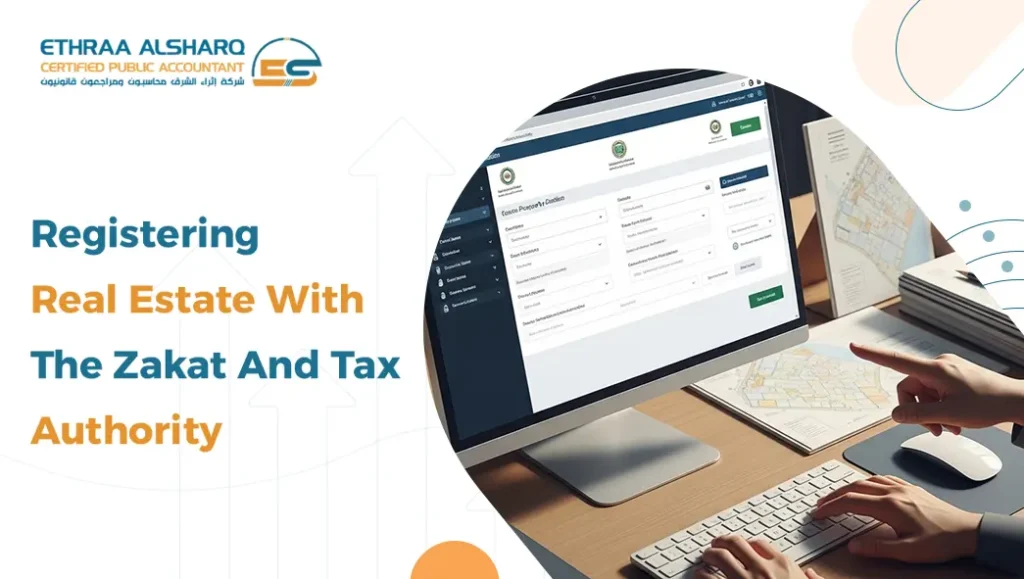
The process begins with registering the taxpayer and the property with the Zakat, Tax and Customs Authority. This is an essential step to issue tax invoices and include transactions in periodic tax returns.
Registration aims to:
Link all real estate transactions to the official tax system
Monitor sales and purchases
Issue electronic invoices
Submit accurate returns within the required deadlines
Registration is also a basic requirement for obtaining a VAT refund in eligible cases, such as purchasing a first home.
Registration Steps:
Log in to the electronic platform of the Zakat, Tax and Customs Authority
Select the service for real estate registration or VAT registration
Enter the owner and property details (deed number, usage type, value, and transaction type)
Upload the required documents and submit the request for review
After approval, the taxpayer receives a tax registration certificate containing a unique number used in all transactions and invoices
Once registered, the taxpayer must:
Submit periodic tax returns
Keep all financial records and invoices for no less than 5 years, in case of future inspections or audits
2. Determining the Type of Transaction – Tax-Exempt Properties
Not all real estate transactions in the Kingdom are subject to VAT. The Authority has identified several cases where real estate is exempt from VAT to support housing stability and reduce financial burdens.
Exempt Property Types:
Residential properties for personal use
Real estate used as a permanent residence for the citizen or family is exempt from VAT, such as purchasing or building a first home, within the initiative to cover the VAT up to SAR 1 million.
Properties owned before VAT implementation
If the property was owned or a sales contract was signed before the effective date of VAT, the transaction is exempt as long as no changes were made to turn it into a commercial investment.
Charitable or non-profit properties
Transactions related to charitable organizations, endowments, or non-profit activities are exempt, provided that the properties are used for approved social or humanitarian purposes.
3. Calculating VAT and Issuing the Invoice
When the transaction is executed, a 15% VAT is calculated on the taxable value of the property. An electronic tax invoice must be issued, including:
The registration number
VAT rate
VAT amount
4. Including the Transaction in the Tax Return
The taxpayer must include all real estate transactions in the periodic tax return and submit it within the required deadline to avoid fines or delays.
5. VAT Refund or Settlement
In some cases, the investor or buyer may be entitled to a VAT refund, especially in the case of purchasing a first home or when there is an excess tax balance.
This is one of the benefits provided by the Authority to reduce financial burdens and ensure fairness in the application of VAT on real estate.
Eligible Refund Cases:
First home purchase: Citizens can refund the VAT paid on purchasing or building their first home, up to SAR 1 million
Incorrect taxation: If VAT was applied by mistake on an exempt property
Cancelled or incomplete transactions: If the transaction is cancelled after VAT payment, a refund can be requested within the legal period
Steps to Apply for a Refund:
Log in to the Authority’s electronic portal
Select the service for VAT refund on real estate
Fill out the application form and attach the required documents (invoice, sale contract, tax registration certificate)
Submit the request and wait for review
Refund requests are usually processed within 30–45 days, and applicants are notified via email or SMS.
A Complete System, Not Just a Tax
These stages show that VAT on real estate is not merely a collection process but an integrated financial system that aims to regulate the market and ensure tax justice among all parties.
Tips for Investors and Property Owners
Managing tax obligations in the real estate sector requires careful awareness of regulations, especially with the overlap between VAT and real estate transaction tax.
To ensure compliance and avoid penalties:
Register properties and transactions immediately
Regularly review invoices and tax returns
Keep records and documents for at least five years
Consult a certified accounting firm when needed
The Role of Ethraa Al-Sharq Accounting & Financial Consulting
Ethraa Al-Sharq plays a key role in supporting investors and property owners by providing professional services in:
Tax registration and invoicing
Preparing accurate tax returns
Submitting refund requests
Ensuring full compliance with regulations
If you are looking for a reliable partner that ensures clarity and financial stability, Ethraa Al-Sharq Accounting & Financial Consulting is your ideal choice.
Conclusion
VAT on real estate is a key element in managing modern real estate investments in Saudi Arabia. It is a regulatory tool that enhances transparency and ensures fairness in the market.
By understanding the application process, distinguishing between residential and commercial properties, and knowing the exemptions and refund opportunities, investors can achieve full compliance and avoid unexpected liabilities.
Working with a specialized accounting office such as Ethraa Al-Sharq ensures professional handling of registration, returns, and refunds in line with the requirements of the Zakat, Tax and Customs Authority.
With the right professional support, VAT becomes not an administrative burden, but a strategic tool that helps with smart financial planning and increasing return on investment.
FAQs About VAT on Real Estate
Is VAT applied to all real estate in Saudi Arabia?
No. VAT applies only to commercial or investment properties at a rate of 15%. Residential properties for personal use, such as a first home, are exempt.
How is a property registered with the Authority?
Registration is completed online by filling in the property registration form, entering the owner and property details, and receiving the tax registration certificate used in all transactions.
Who is eligible for VAT refund?
Citizens who purchased or built a first home, or cases where VAT was incorrectly applied to an exempt property.
Why use an accounting office for real estate tax?
An accounting firm ensures accurate submissions, reviews tax obligations, prepares refund applications, and prevents penalties or compliance issues.
What is the VAT rate on property leasing?
Residential leasing: Exempt from VAT
Commercial leasing: Subject to 15% VAT