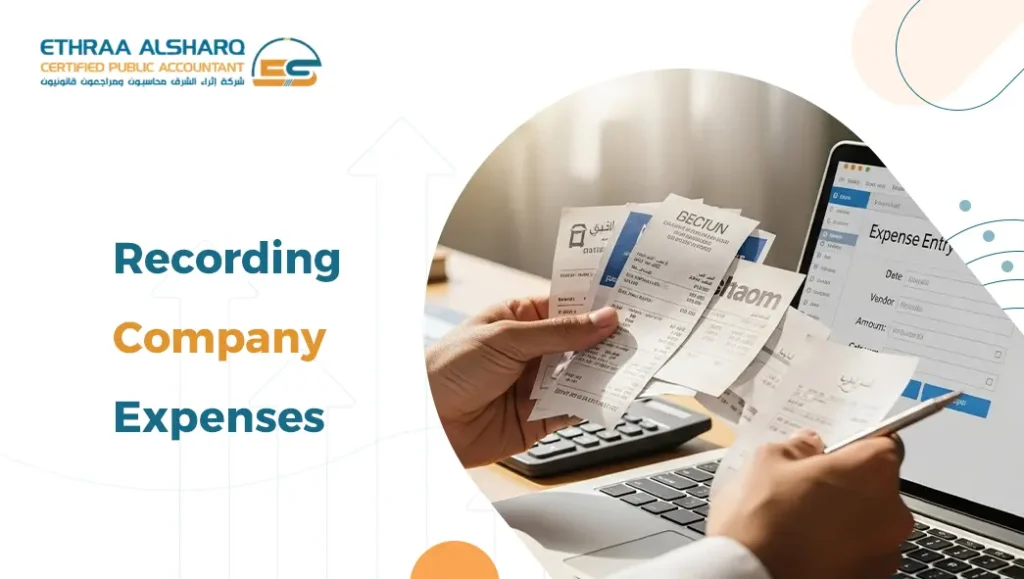
Expenses, with all their variety and complexity, represent the most sensitive part of the profitability equation. It is not merely about recording numbers but requires a deep understanding of the nature of each expense and its correct accounting classification, as this has a direct impact on accurate expense accounting and efficient cost management.
Since controlling money starts with knowing where it goes, this guide explains the types of company expenses, including operating expenses, administrative expenses, and others, turning your expense management into a strategic process that ensures accurate accounting and a strong corporate budget.
What Are Company Expenses?
Company expenses are defined as all costs incurred by a business during a specific financial period to operate its activities, support administrative functions, or maintain its ability to continue generating revenue. These expenses represent an actual consumption of economic resources, whether in cash payments or accrued obligations.
Expenses are recorded in expense accounts and then reported on the income statement, where they are matched against revenues to determine the company’s profit or loss, according to the accrual principle and accounting standards adopted in Saudi Arabia.
Importance of Accounting Classification of Company Expenses
Classifying expenses is a fundamental element in cost management and improving the quality of financial information. Its importance is highlighted in several areas:
-
Enhancing financial analysis accuracy: Separating operating, administrative, and capital expenses helps evaluate true company performance and measure the profitability of different activities accurately.
-
Improving budget preparation: Clear classification contributes to more realistic budgets and facilitates monitoring variances and controlling spending.
-
Supporting managerial decisions: Provides reliable information to guide spending and allocate resources toward the most efficient activities.
-
Accounting and regulatory compliance: Ensures the correct presentation of expense accounts and adherence to international standards (IFRS) and regulatory requirements.
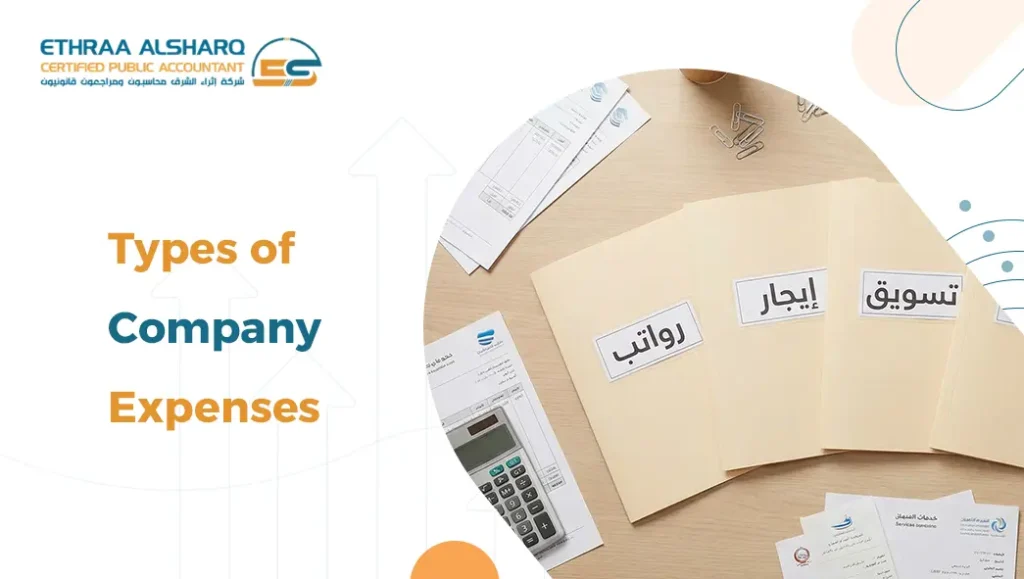
Main Types of Company Expenses
Company expenses are divided into several main types, each with its nature and impact on the financial statements, forming the basis for accurate expense accounting:
1. Operating Expenses (OPEX)
These are costs associated with daily activities necessary to run the company and generate revenue during the current financial period. They include:
-
Salaries and wages of employees directly involved in production or service delivery, including temporary staff, bonuses, and incentives.
-
Costs of raw materials and operational supplies used in production or service provision.
-
Utilities and service expenses such as electricity, water, gas, internet, and routine equipment maintenance.
-
Selling and marketing expenses such as advertising, shipping and distribution costs, and sales commissions.
Operating expenses are recorded in the operating expense account in the income statement and are used to analyze the operating profit margin, assess daily operational efficiency, and make strategic expense management decisions to ensure maximum operational profitability.
2. Administrative Expenses
Administrative expenses relate to costs that support management and organizational functions within the company and are not directly tied to production or service delivery. Key examples include:
-
Salaries of administrative staff, supervisors, and managers.
-
Office supplies and equipment, including computers, software, and office furniture.
-
Insurance and legal fees, such as business licenses, court fees, internal audits, and financial consulting.
-
Travel, transportation, and logistics services related to administration.
Separating administrative from operating expenses helps control general expenses, analyze administrative efficiency, and prepare precise budgets that clearly reflect indirect operating costs.
3. Capital Expenditures (CapEx)
Capital expenditures are costs associated with long-term investments aimed at increasing production capacity or enhancing fixed assets. Their financial impact extends over more than one accounting period. Examples include:
-
Purchasing fixed assets such as buildings, machinery, equipment, and vehicles.
-
Improving and developing existing assets to increase capacity or operational efficiency.
-
Expansion projects or new investments, such as adding production lines or expanding facilities.
These expenses are recorded in the fixed assets ledger and depreciated gradually, allowing the company to spread the financial impact over multiple periods, accurately analyze ROI, and support long-term financial planning.
4. Financial Expenses
These include costs related to obtaining funding and managing financial obligations, such as:
-
Bank loan interest or other debt obligations.
-
Bank fees and credit facilities charges.
-
Losses from financial investments or currency exchange differences.
Financial expenses help measure financing costs, analyze investment feasibility, and evaluate the company’s ability to meet creditor obligations.
5. Tax Expenses
These are all tax obligations imposed on the company according to local laws, such as:
-
Income tax on company profits.
-
Property taxes, customs duties, and other government levies.
Tax expenses are recorded in financial statements to ensure legal compliance and to analyze net profit after tax.
6. Deferred Expenses
Deferred expenses are costs paid for services or assets that benefit the company over multiple periods, such as:
-
Initial company setup costs.
-
Research and development expenses related to long-term projects.
-
Long-term subscriptions or contracts paid in advance.
This classification helps match expenses with associated revenues, improving financial analysis accuracy and future planning.
Common Mistakes in Recording Company Expenses
Accurate expense recording is essential to maintain the integrity of financial statements and efficient cost management. Common errors include:
-
Mixing operating and capital expenses: Can overstate or understate profit inaccurately.
-
Recording expenses in the wrong financial period: Weakens the accuracy of financial statements and affects planning.
-
Poor documentation: Complicates audits and increases tax compliance risks.
-
Duplicate or omitted entries: Distorts expense accounting and budget accuracy.
-
Incorrect classification by type: Reduces the ability to analyze financial performance and make strategic decisions.
How Accounting Firms Can Help Manage Expenses
Accounting firms play a crucial role in enabling companies to manage expenses efficiently and accurately, including:
-
Expense classification: Separating operating, administrative, and capital expenses for clearer financial analysis.
-
Monitoring spending and budget adherence: Tracking actual versus planned spending to reduce waste and control costs.
-
Providing financial analysis and reporting: Supports informed strategic decision-making.
-
Supporting investment planning: Directing resources toward higher-return projects and improving capital decisions.
-
Ensuring financial and tax compliance: Adhering to local and international accounting standards and Zakat & Tax Authority requirements.
-
Enhancing transparency and financial efficiency: Improving fund management and building stakeholder and investor confidence.
Conclusion
Effective financial management in Saudi companies cannot be complete without a thorough understanding of expense types and accurate classification. Clear differentiation between operating expenses (daily operations), administrative expenses (supporting the overall structure), and capital expenses (long-term investments) is the cornerstone for accurate income statements and balance sheets.
Avoiding common mistakes, such as mixing capital and operating expenses or weak documentation, is key to efficient expense management. Strategic decision-making directly depends on the accuracy of these classifications, impacting budget efficiency and the company’s ability to achieve financial goals.
Do you need to ensure accuracy and compliance in expense accounting and classification? Contact Ethraa Al Sharq Accountants and Legal Auditors. Our expert team is ready to analyze and classify all your expenses to ensure maximum transparency and financial efficiency, turning expenses into a strategic tool for business growth rather than just a financial burden.
Frequently Asked Questions About Company Expenses
What is the key difference between operating and capital expenses?
The main difference lies in timing: operating expenses are fully consumed in the accounting period they occur (e.g., salaries, rent), while capital expenses are capitalized as fixed assets and depreciated over multiple years.
How does expense classification affect company budgets?
Accurate classification ensures that the budget reflects true company performance. For example, recording a capital expense (like machinery purchase) as an operating expense inflates expenses and incorrectly reduces net profit, misleading management and investors.
What are common mistakes in expense accounting?
Common mistakes include mixing operating and capital expenses, recording expenses in the wrong period (violating accrual principle), and poor documentation of supporting records.
What is the importance of financial expenses?
Financial expenses (e.g., loan interest) measure the cost of financing, analyze the company’s capital structure, and assess debt repayment ability. They are separated from operating and administrative expenses to measure operational efficiency independently.
Are deferred expenses recorded directly on the income statement?
No. Deferred expenses (e.g., setup costs) are prepaid for future benefits. They are recorded as deferred assets and gradually expensed on the income statement over the periods benefiting from them to match revenues with associated costs.