Imagine that you own a date-processing factory with land, buildings, machinery, and an inventory of the finest products. Then an investor offers to buy the factory at a price equal only to the value of its tangible assets. Would you agree?
Certainly not. There are values that cannot be seen with the naked eye yet may be worth far more than the physical assets themselves—your trusted brand name recognized by millions, exclusive packaging formulas, and long-standing relationships in international markets.
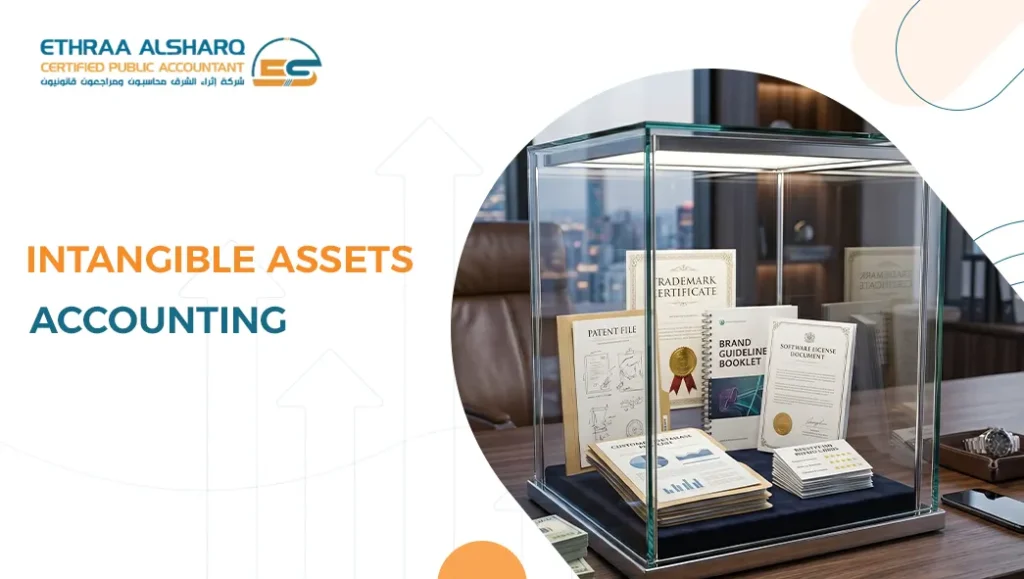
These values are known in the business world as intangible assets. Although they cannot be seen or touched, they can be worth more than factories and real estate combined.
In this article, we will explore what intangible assets are, how they are valued, and why they may be the most valuable assets your company owns.
What Are Intangible Assets?
Intangible assets are identifiable, non-monetary assets without physical substance. According to International Accounting Standard (IAS 38), which is adopted in Saudi Arabia, an asset must meet three criteria to be recognized:
- Identifiability: The asset can be separated from the entity (such as selling a specific license).
- Control: The entity has the ability to control the future economic benefits generated by the asset.
- Economic Benefits: The asset is expected to generate cash inflows or cost savings in the future.
Key Characteristics of Intangible Assets
To distinguish these assets from other balance sheet items, they typically possess the following characteristics:
Non-Physical Nature
Their value lies in the legal rights, intellectual property, and economic advantages they provide rather than any physical form.
Long-Term Nature
They are classified as non-current assets because their benefits extend beyond a single financial period, requiring a long-term investment perspective.
Measurable Financial Value
Although intangible, their cost or fair value can be measured using recognized valuation methods.
Strong Competitive Advantage
They often serve as the primary driver of differentiation, whether through patented technology or a trusted brand.
Difference Between Tangible and Intangible Assets
To better understand intangible assets, it is important to distinguish them from traditional assets:
Physical Existence
Tangible assets have a physical form, such as buildings, vehicles, and inventory, whereas intangible assets derive their value from legal rights and competitive advantages.
Valuation Method
Tangible assets are generally valued based on historical cost or market value, while intangible assets often require sophisticated valuation models based on future cash flows.
Accounting Treatment
Tangible assets are subject to depreciation, while intangible assets are subject to amortization, with exceptions for assets that have indefinite useful lives, such as goodwill.
Risk Exposure
Tangible assets are exposed to physical damage or theft, whereas intangible assets face risks such as technological obsolescence or expiration of legal protections.
Types of Intangible Assets
Intangible assets contribute significantly to an organization’s market value and can be categorized into five primary areas:
Brand Value
A brand represents the mental image of a company in the minds of customers and extends beyond a logo to include:
Customer Attraction
The brand’s role in building loyalty and reducing customer acquisition costs.
Pricing Power
The ability of a trusted brand to command premium prices and improve profit margins.
Intellectual Property
Intellectual property serves as the legal protection for a company’s innovations and creative works, including:
Patents
Protection for unique inventions and technological processes.
Copyrights
Protection for intellectual and creative content.
Trade Secrets
Proprietary formulas, methods, and business processes that provide a competitive advantage.
Licenses
Rights to use assets owned by others under legally binding agreements.
Business Reputation (Goodwill)
This represents value that cannot be recognized as a separate asset except during acquisitions and is associated with:
Customer Trust
The accumulated credibility a company has built in the marketplace.
Service Quality
High standards that differentiate the company from competitors.
Market Perception
Positive evaluations from investors and market analysts.
Software and Operating Systems
In the digital age, technology has become a critical intangible asset, including:
Internal Software
Systems developed internally to meet specific business needs.
Technology Platforms
ERP systems and other software solutions that support daily operations.
Customer Relationships and Contracts
Value derived from long-term legal and commercial relationships, such as:
Long-Term Contracts
Securing future cash flows through extended supply or service agreements.
Customer Databases
Structured customer information that enables more effective targeting and sales efforts.
After understanding the various types of intangible assets, the next important question is: How are they treated in financial statements?
How Are Intangible Assets Recorded in Accounting?
Professional accounting standards require careful treatment of intangible assets when recording them in financial statements:
Initial Recognition
The asset is initially recognized at cost when acquired from an external source.
Subsequent Measurement
Companies may choose either the cost model or the revaluation model.
Annual Impairment Testing
An annual assessment is required to ensure that the carrying amount does not exceed the asset’s recoverable amount, particularly for assets with indefinite useful lives.
How Do Intangible Assets Affect Company Value?
Intangible assets are not merely accounting figures; they are often the true drivers of value creation in modern businesses.
Increasing Market Value
Companies with strong brands often trade at higher valuation multiples than their competitors.
Enhancing Operating Profitability
They help reduce customer acquisition costs and improve customer retention rates.
Strengthening Competitive Position
They create barriers to entry, making it difficult for competitors to replicate innovations or established reputations.
Attracting Investors and Financing
Investors tend to favor businesses with legally protected assets capable of generating sustainable returns.
Methods for Valuing Intangible Assets
Valuing intangible assets is not a matter of estimation alone; it is a specialized process guided by international valuation standards.
Cost Approach
Focuses on the actual cost incurred to create or replace the asset, such as software development costs.
Market Approach
Relies on comparisons with similar assets that have been traded in the market, which often requires significant expertise due to the unique nature of each intangible asset.
Income Approach
The most widely used method, based on the present value of future cash flows or earnings expected to be generated by the asset.
The Role of Financial Analysis in Valuing Intangible Assets
Financial analysis goes beyond reviewing numbers to understand the underlying drivers of business value.
Linking Financial Statements to Market Value
Analyzing the gap between a company’s book value and its fair market value to determine the contribution of intangible assets.
Measuring Brand Impact on Profitability
Evaluating how brand strength contributes to higher profit margins compared to competitors.
Assessing the Effectiveness of Intellectual Asset Investments
Reviewing expenditures on research, development, and innovation and determining how effectively they generate sustainable returns.
Measuring Return on Intangible Assets
Using financial indicators to assess the effectiveness of these assets in enhancing operational and financial performance.
How Can Ethraa Al Sharq Help You?
At Ethraa Al Sharq, we believe that intangible assets are among the most important drivers of business sustainability. Therefore, we provide comprehensive solutions that include:
Intangible Asset Valuation
Using internationally recognized methodologies to ensure fair and accurate valuations.
Financial Reporting
Ensuring full compliance with IFRS requirements related to intangible assets.
Market Value Analysis
Providing insights into the gap between book value and market value to enhance business attractiveness.
Intellectual Property Governance
Helping organizations document and protect intellectual assets to maintain control over them.
Financial and Investment Advisory
Supporting informed decision-making through detailed analysis of expected returns from intangible assets.
Conclusion
Intangible assets are a key driver of growth within the framework of Saudi Vision 2030. Managing these assets from an accounting perspective requires a careful balance between compliance with accounting standards and strategic investment insight.
Do your financial statements truly reflect the value of your brand and intellectual assets?
At Ethraa Al Sharq, we help businesses govern and value their intangible assets to maximize financial performance and business value. Contact us today for professional consultation.
Frequently Asked Questions (FAQ)
What are intangible assets?
Intangible assets are non-physical assets, such as patents and trademarks, that provide future economic benefits and can be identified through legal or contractual rights.
Is a brand considered an intangible asset?
Yes. A brand is one of the most important intangible assets. However, under accounting standards, it is generally recognized only when acquired through a business acquisition. Internally developed brands are typically not recognized on the balance sheet.
How are intangible assets valued?
They are commonly valued using three approaches: the cost approach, the market approach, and the income approach based on future earnings potential.
What is the difference between depreciation and amortization?
Depreciation applies to tangible assets such as machinery, while amortization applies to intangible assets with finite useful lives.
Does business reputation affect company value?
Absolutely. Business reputation often represents the difference between a company’s market value and its book value and is a key factor influencing investor decisions.
Why do investors care about intangible assets?
Because they create competitive barriers that are difficult for competitors to replicate and help sustain long-term profitability through innovation, intellectual property, and strong customer relationships.