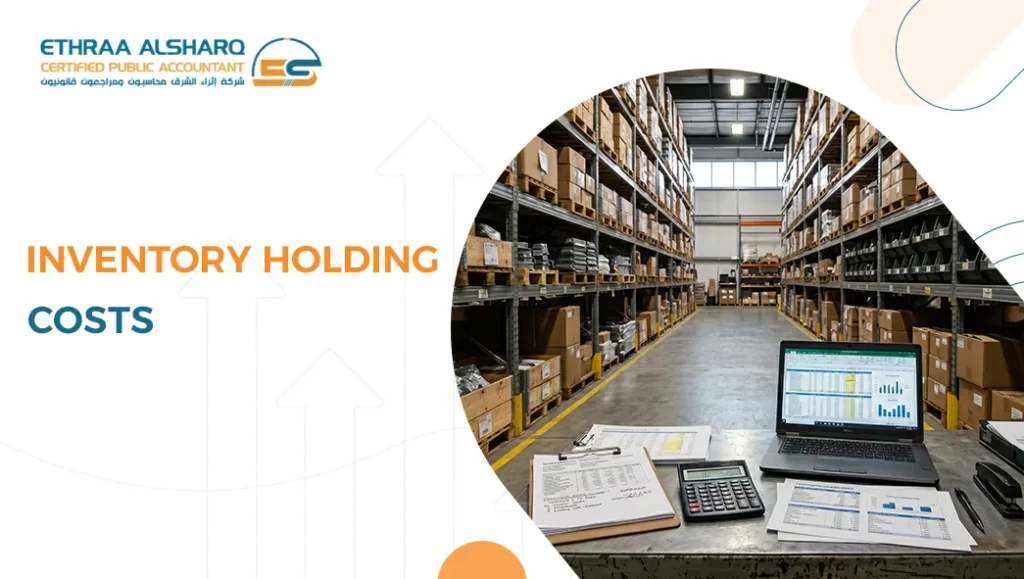
A business owner purchases large quantities of inventory to obtain a supplier discount and fills the warehouse with stock. At first, this feels like a smart decision: better discounts, continuous availability, and protection against stock shortages.
However, months later, they discover that their profits do not reflect this purchasing “success” and may even be lower than expected.
What actually happened is that inventory holding costs—the silent expenses that are often overlooked during the purchasing process—have consumed a significant portion of the discount received, and may have even eliminated it entirely.
Storing inventory is not free. Every day that goods remain in a warehouse carries a cost. Some of these costs are visible, such as warehouse rent and storage labor, while others are hidden, such as the opportunity cost of tied-up capital, product deterioration, theft, and obsolescence.
In this article, we break down these costs and explain why, in many cases, maintaining lower inventory levels can be far more profitable than holding excessive stock.
What Are Inventory Holding Costs?
Inventory holding costs represent the total expenses a company incurs to store goods in its warehouses for a specific period before they are sold.
These costs extend far beyond the purchase price of the products. They include storage expenses, insurance, labor, and the risks associated with damage, theft, or obsolescence.
Typically, inventory holding costs account for approximately 20% to 30% of the total inventory value annually—a substantial figure that can significantly impact a company’s profitability.
Why Are Inventory Holding Costs a Financial Risk?
The danger of inventory holding costs goes beyond being an additional expense. They represent a direct threat to a company’s financial stability by affecting three critical areas:
Cash Flow Drain
Cash is the lifeblood of any business. When excessive amounts of money are invested in inventory beyond actual needs, liquid funds are converted into idle assets.
This ties up cash resources and weakens the company’s ability to handle unexpected obligations or pay employees and suppliers on time.
Profitability Erosion
Profit is not determined by what you sell but by what remains after costs are deducted.
Every day a product sits on a shelf increases its carrying cost through expenses such as electricity, climate control, security, and rent.
Over time, these accumulated costs can consume the entire profit margin and may even force the company to sell products below cost simply to clear inventory.
Working Capital Paralysis
Financial efficiency is measured by how quickly working capital circulates.
Excess inventory traps capital inside warehouse walls, preventing reinvestment into growth opportunities or high-demand products, ultimately creating economic stagnation within the business.
The Four Components of Inventory Holding Costs
These costs can generally be divided into four major categories that require continuous monitoring:
1. Cost of Capital
This represents the opportunity cost of funds tied up in inventory.
In other words, it is the return that could have been generated if the capital invested in inventory had been allocated to expansion projects or financial investments.
2. Inventory Service Costs
These include:
- Inventory insurance
- Taxes on inventory (where applicable)
- Costs associated with inventory management and tracking systems
3. Storage Space Costs
These include:
- Warehouse rent
- Utility expenses such as electricity and water
- Building maintenance
- Material handling equipment such as forklifts
4. Inventory Risk Costs
These arise from risks such as:
- Product damage
- Theft
- Obsolescence due to technological changes or shifts in consumer preferences
When Do Inventory Holding Costs Become Excessive?
Several warning signs indicate that inventory holding costs are becoming unmanageable and negatively affecting the company’s financial position.
Slow Inventory Movement
When turnover rates decline and products remain in storage for extended periods without demand, operating expenses continue accumulating without generating profits.
Increasing Days in Inventory
The longer inventory remains in storage before being sold, the greater the accumulated costs associated with rent, refrigeration, security, and maintenance.
Declining Cash Flows
When a company struggles to fund daily operations because most of its cash has been invested in inventory that is not converting into sales quickly enough.
Rising Opportunity Costs
This occurs when a company is forced to borrow money at high interest rates to finance operations while its own funds remain tied up in slow-moving inventory.
Strategies for Reducing Inventory Holding Costs
To balance product availability with cost efficiency, companies can adopt smart inventory management strategies that create agile supply chains.
Improve Demand Forecasting
Utilize historical data and analytics to estimate future demand accurately.
Reduce Impulse Purchasing
Avoid buying excessive quantities solely to secure temporary discounts that may ultimately cost more in storage expenses than the savings generated.
Reduce Obsolete Inventory
Identify products that have not moved for extended periods.
Clearance Sales and Promotions
Launch promotional campaigns and special discounts to convert stagnant inventory into immediate cash rather than allowing it to remain a financial burden.
Implement a Just-in-Time (JIT) System
Receive inventory from suppliers in line with actual production requirements or customer demand.
Minimize Storage Needs
This approach significantly reduces warehouse space requirements and associated storage costs.
Improve Warehouse Management
Optimize storage layouts and leverage technology to accelerate inventory counting and handling processes.
Reduce Operating Costs
Efficient warehouse organization lowers labor costs, energy consumption, and operational inefficiencies.
Manage Capital Efficiently
View inventory as a financial asset that should generate returns quickly.
Minimize Tied-Up Capital
Reducing the amount of time inventory remains in storage enhances the company’s ability to invest in other opportunities and lowers the cost of capital associated with idle stock.
The Relationship Between Inventory and Liquidity
The relationship between inventory and liquidity is highly sensitive and generally inverse.
As inventory grows beyond optimal levels, financial flexibility decreases.
Impact on Cash Flow
Every dollar spent on inventory that remains unsold is a dollar removed from available operating cash.
Excess inventory can create a cash flow bottleneck, where the company appears asset-rich on paper but struggles to pay short-term obligations or employee salaries due to a lack of liquid cash.
Impact on Quick Assets
In financial analysis, inventory is excluded from the quick ratio because it is the least liquid current asset.
Excessive inventory weakens the quality of a company’s quick assets and may negatively affect how banks and investors evaluate its financial position.
Common Mistakes in Managing Inventory Holding Costs
Many businesses fall into management traps that inflate inventory carrying costs without realizing it, ultimately reducing profitability.
Purchasing Large Quantities Without Analysis
Buying excessive inventory based on intuition or inaccurate demand forecasts often results in stock accumulation and unnecessary storage costs.
Ignoring the Cost of Capital
Failing to account for the lost return on funds tied up in inventory can significantly distort profitability assessments.
Focusing Solely on Supplier Discounts
Bulk-purchase discounts can be misleading if the associated storage costs and inventory risks exceed the value of the discount itself.
Neglecting Periodic Inventory Analysis
Failing to conduct regular reviews, such as ABC analysis, can result in retaining slow-moving inventory for long periods, consuming valuable warehouse space and operating resources.
How Ithraa Al Sharq Can Help
At Ithraa Al Sharq, we understand that successful financial management begins with effective asset control.
We provide comprehensive solutions that transform inventory from a financial burden into a growth driver.
Our services include:
Inventory Cost Analysis
A detailed examination of all inventory-related expenses to identify inefficiencies and reduce operational costs.
Inventory Optimization
Designing control systems that balance product availability with optimal inventory levels.
Accurate Financial Reporting
Providing periodic reports that reflect the true value and turnover performance of inventory, enabling informed decision-making.
Cash Flow Enhancement
Helping businesses unlock capital trapped in stagnant inventory and improve liquidity for future investments.
Conclusion
Understanding inventory holding costs is the first step toward transforming your warehouse from a cost center into a profit center.
Smart inventory management is not merely about ensuring product availability; it is about protecting cash flow and preventing hidden waste from consuming working capital.
Do you feel that your inventory is draining your company’s liquidity?
Don’t let profits slip away unnoticed.
Contact the experts at Ithraa Al Sharq today for a professional consultation and comprehensive inventory analysis. Let us help you convert stagnant inventory into cash flow that supports your business growth.
Frequently Asked Questions
What Are Inventory Holding Costs?
They are the total expenses incurred to store, maintain, and protect unsold inventory, including storage costs, insurance, labor expenses, and the opportunity cost of tied-up capital.
Is Excess Inventory a Problem?
Yes, significantly.
Excess inventory is not simply unused stock—it continuously erodes profitability through storage costs and increases the risk of product damage or obsolescence, potentially resulting in a complete loss of value.
How Do Inventory Costs Affect Liquidity?
The relationship is direct and significant.
Every dollar invested in excess inventory reduces available cash. This tied-up capital limits a company’s ability to meet short-term obligations and invest in growth opportunities.
What Is the Best Way to Reduce Inventory Holding Costs?
The most effective approach is regular analysis and accurate forecasting.
Businesses should implement intelligent inventory management techniques such as ABC analysis, reduce order quantities while increasing replenishment frequency, and dispose of slow-moving items through targeted promotional campaigns.
Are Small Businesses Affected by These Costs?
Absolutely.
In many cases, small businesses are even more vulnerable because they have limited financial flexibility.
Holding excess inventory for just a few additional weeks may create cash shortages severe enough to impact payroll, rent payments, and daily operations.