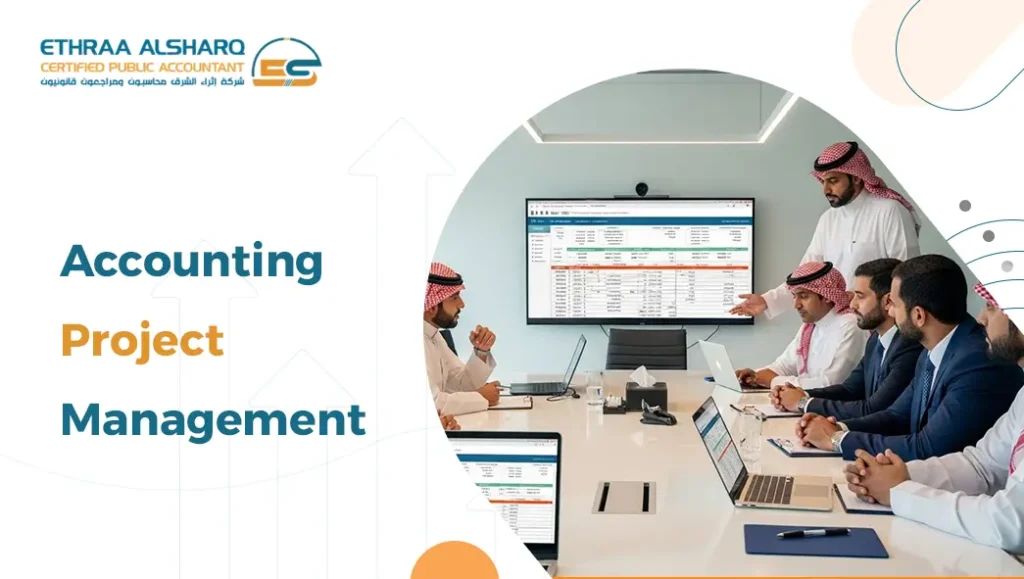
Imagine a massive project moving without a clear financial roadmap, or a ship sailing without a financial captain monitoring the load. In today’s business world, completing a project is no longer enough; it must be accomplished with maximum financial efficiency.
Here emerges the importance of Accounting Project Management, a crucial tool that ensures budget compliance, improves resource utilization, and achieves long-term financial sustainability.
What is Accounting Project Management?
Project management from an accounting perspective differs from traditional management, which focuses on timelines and technical scope. It is not just planning and executing tasks; it applies accounting principles, tools, and techniques across all project stages to ensure budget adherence and financial efficiency.
The main goal is not only task completion but also tracking revenues, costs, cash flows, and analyzing the financial performance of the project continuously. This supports strategic decision-making and ensures long-term sustainability.
For accountants, a project is seen as a temporary entity for costs and profits, requiring a subsidiary accounting system to evaluate financial performance, including:
-
Cost of Acquisition (CoA).
-
Break-even Point.
-
Actual profitability and Return on Investment (ROI).
Objectives of Financial Project Management
Financial project management aims to achieve several key objectives, including:
-
Cost Control: Monitor expenses to ensure adherence to the allocated budget.
-
Resource Optimization: Direct funds and resources efficiently toward high-impact activities.
-
Decision Support: Provide accurate financial data to help leaders make informed strategic decisions.
-
Transparency and Accountability: Ensure financial operations are clear to all stakeholders.
To understand how financial aspects affect project progress, let’s look at the difference between operational management and accounting management.
Difference Between Operational and Accounting Project Management
| Aspect | Operational Management (Traditional) | Accounting (Financial) Management |
|---|---|---|
| Main Focus | Scope, quality, timeline, human resources | Cost, cash flow, budget, profitability (private sector) |
| Ultimate Goal | Deliver product/service as per specifications | Financial transparency, expenditure control, and maximizing ROI |
| Main Tool | Task management software and timelines | Government accounting systems or ERP, variance analysis |
This coordination ensures that the project succeeds not only technically but also financially.
Stages of Project Management with a Financial Focus
Financial project management passes through several interconnected stages that ensure control and efficiency:
-
Financial Planning: Define the budget, funding sources, and estimate expected costs.
-
Project Execution: Monitor fund disbursement according to plan and record financial transactions accurately.
-
Monitoring and Periodic Review: Continuously assess financial performance and compare actual costs with the budget.
-
Financial Closure: Analyze final financial results and prepare comprehensive reports to evaluate project success financially.
Project performance review becomes a crucial tool at this stage to ensure the project proceeds as planned.
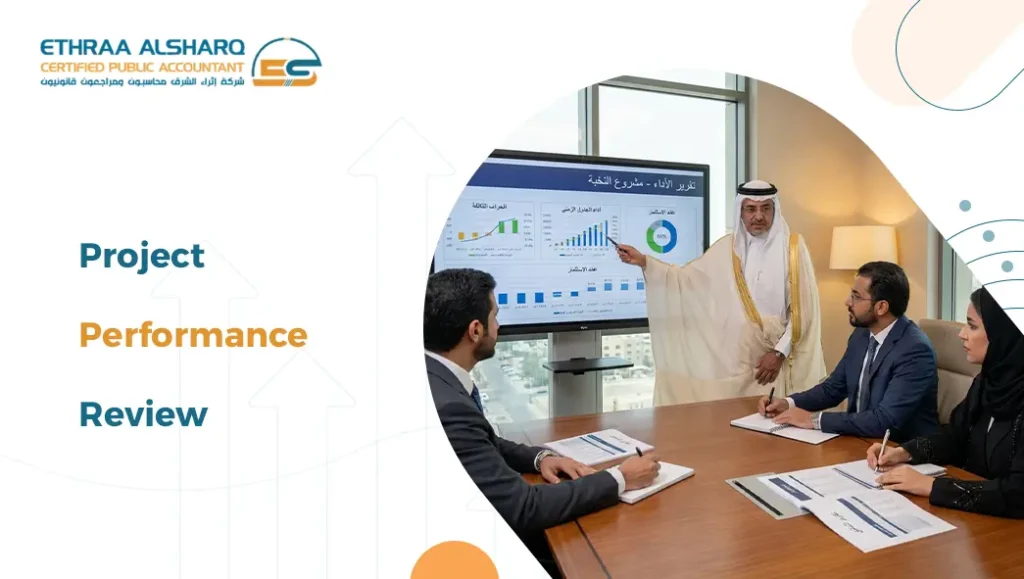
Project Performance Review
Project financial audit (Project Audit) is a vital accounting tool that ensures the project is executed according to the approved budget and plan. It is a systematic, independent examination to verify the integrity and efficiency of financial operations.
Objectives of Project Audits:
-
Compare actual costs to planned costs to identify financial deviations.
-
Analyze deviations to determine reasons for any significant differences, positive or negative.
-
Assess financial and operational performance indicators (KPIs) to ensure the project aligns with strategic goals.
Role of Audits in Transparency and Control
Audits directly enhance financial transparency and control in both public and private sectors; they detect weaknesses in internal controls or practices that may lead to financial waste, reducing the risk of fraud and ensuring compliance with regulatory requirements.
Challenges in Financial Project Management
Accounting project management faces several obstacles that can affect estimates and control. Key challenges include:
-
Scope Creep: Any unplanned expansion in project requirements leads directly to increased costs and budget imbalance.
-
Lack of Accurate Data: Difficulty tracking indirect costs or allocating shared resources among multiple projects.
-
Delayed Reporting: Late reporting of expenditures hinders timely corrective actions.
-
Organizational Complexity: Differences in accounting systems between departments impede unified data and performance reporting.
To overcome these complex challenges, organizations and government entities in Saudi Arabia require external specialized expertise.
Role of Accounting Firms in Supporting Project Management
Accounting firms provide essential support in:
-
Conducting periodic reviews to ensure financial compliance.
-
Designing advanced accounting systems to track financial performance and assess risks.
-
Training internal teams on best accounting practices and financial reporting.
Specialized firms, such as Ethraa Alsharq Accountants and Legal Auditors, play a pivotal role in financial project management by:
-
Designing specialized accounting systems: Helping organizations build and adapt cost accounting systems suitable for different projects.
-
Independent financial auditing: Conducting periodic or final audits to evaluate adherence to the budget and recommend improvements in internal controls.
-
Training and competency development: Training project management teams on modern accounting tools (like EVM) and analyzing revenues and expenditures across classifications.
-
Digital transformation: Assisting organizations in adopting modern ERP systems to ensure automated cost tracking, enhance financial transparency, and speed up performance reporting.
Combining precise financial planning, continuous auditing, and expert accounting support ensures project success and maximum transparency and efficiency in Saudi organizations and companies.
Conclusion
Accounting project management is no longer just an additional function; it is a strategic necessity to ensure every project achieves its objectives within financial parameters. By applying accurate standards in planning, tracking, and auditing, organizations in both the public and private sectors can achieve high levels of efficiency and accountability, building trust in financial management and supporting Saudi Arabia’s sustainable growth efforts.
FAQ on Accounting Project Management
Q: What is the key difference between traditional project management and accounting project management?
A: Traditional management focuses on scope, time, and quality (technical aspects), while accounting management focuses on cost tracking, cash flows, and achieving planned profitability (financial aspects). Both are essential for project success.
Q: What is Earned Value Management (EVM) and how is it used in financial project management?
A: EVM is an advanced methodology integrating scope, schedule, and cost metrics. It measures project performance by comparing Planned Value (PV), Actual Cost (AC), and Earned Value (EV), helping detect early cost or schedule deviations.
Q: What is the role of audit in projects?
A: Project audits are independent checks to ensure revenues and expenses comply with budgets and internal financial controls. Their main goal is enhancing transparency, reducing waste, and identifying causes of financial deviations.
Q: What is the biggest financial challenge for project managers?
A: Scope creep is the most critical challenge, directly causing budget overruns. Challenges in cash flow and accurate cost estimation are also major obstacles.
Q: When should companies seek external accounting support for their projects?
A: External support is recommended during stages that require specialized expertise, such as designing custom cost accounting systems, performing independent financial audits, or ensuring compliance with local tax and accounting regulations.