Traditional financial reports tell us what happened, but they do not answer the more important questions: Why did it happen? And how can results be improved in the future?
In a rapidly changing business environment, managers face a fundamental challenge: how can potential opportunities be transformed into measurable outcomes?
This is where management accounting emerges as an advanced analytical framework that provides management with accurate, forward-looking insights. Rather than relying solely on historical data, it offers operational and predictive analyses that help identify waste, evaluate activity efficiency, and guide pricing and investment decisions — all in support of increasing value and ensuring organizational sustainability.
In this article, we explore the role of management accounting and its key tools, enabling organizations to move from merely monitoring numbers to actively creating numbers and making more effective decisions.
What is Management Accounting?
Management accounting represents an integrated information system dedicated to collecting, analyzing, and interpreting financial and non-financial data to provide management with clear insights that support planning, control, and sound decision-making.
Unlike financial accounting, which focuses on reports intended for external stakeholders, management accounting transforms internal data into operational and strategic indicators, helping management anticipate the future and enhance performance.
This approach relies on a set of analytical methods and tools that convert numbers into valuable inputs, enabling the organization to evaluate activity efficiency, manage costs effectively, and improve readiness for operational and financial challenges.
The Role of Management Accounting in Supporting Management
Management accounting plays a strategic role that goes beyond preparing traditional reports. It has become one of the most important instruments organizations rely on to guide their activities and achieve higher operational efficiency. Its function is built on three main pillars:
Planning
It contributes to preparing budgets and defining future financial and operational objectives, helping management draw a clear roadmap for resource allocation and growth.
Control
Control tools are used to compare actual performance with planned targets, analyze deviations, and identify strengths and weaknesses. This analysis enables management to take immediate corrective actions that enhance performance quality and improve process efficiency.
Decision Making
Management accounting provides in-depth analyses that support critical decisions, such as:
-
Make-or-buy decisions
-
Pricing strategies
-
Evaluating capital investment projects
These analyses directly contribute to improving spending efficiency and enhancing competitiveness, in alignment with Saudi Vision 2030.
These three pillars are not ends in themselves, but rather means to achieve comprehensive objectives that any forward-moving organization seeks to accomplish.
Objectives of Management Accounting
Management accounting aims to achieve a set of goals that support organizational efficiency and effective decision-making in a competitive Saudi market. The most prominent objectives include:
-
Enhancing resource utilization by evaluating activities and identifying high-return areas.
-
Supporting financial and strategic planning through future-oriented data for budgeting and forecasting needs.
-
Strengthening internal control by monitoring actual performance against targets and detecting deviations early.
-
Improving decision quality by providing quantitative and qualitative analyses that support choosing the best alternatives.
-
Reducing costs and increasing profitability by studying fixed and variable costs and optimizing cost structures.
-
Evaluating product and service profitability to ensure resources are directed toward the most valuable activities.
-
Enhancing competitiveness by improving operational efficiency and increasing management responsiveness to market changes.
Turning these theoretical objectives into real achievements requires a sophisticated system of accounting tools and techniques specifically designed to support management functions with high efficiency.
Management Accounting Tools
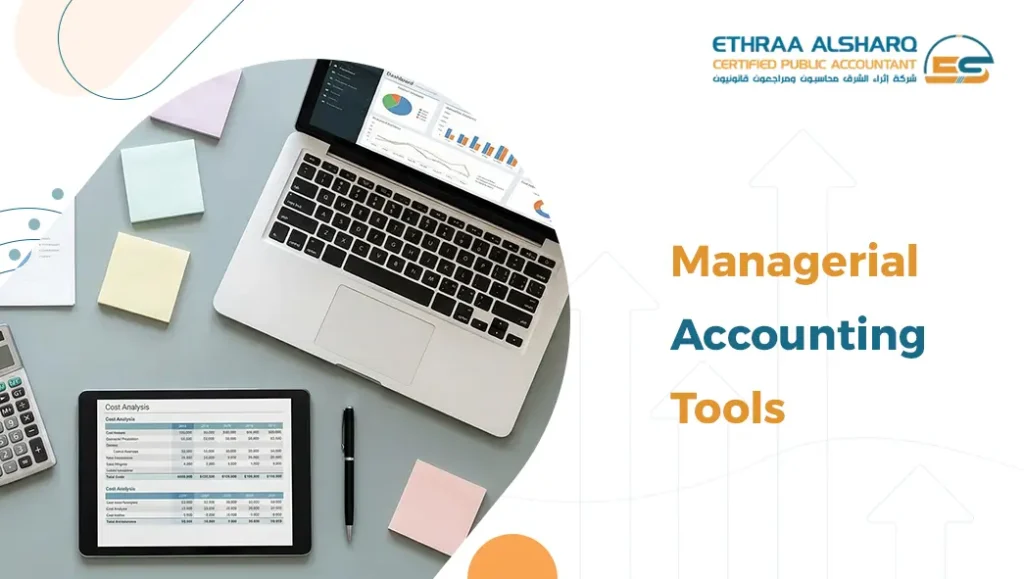
Management accounting relies on an integrated set of tools that enable management to analyze data and make accurate strategic decisions. The most important tools include:
-
Cost Analysis: Studying fixed and variable costs to identify waste and improve operational efficiency.
-
Budgeting: Preparing financial and operational budgets to allocate resources and achieve targeted objectives.
-
Performance Reports: Measuring actual performance against planned results and analyzing variances to provide corrective recommendations.
-
Profitability Analysis: Evaluating the profitability of products and services to determine the most valuable activities for the organization.
-
Decision Analysis: Supporting strategic decisions such as make-or-buy, pricing strategies, and evaluating capital investment projects.
-
Financial Planning: Using financial data to identify future needs and ensure the organization’s financial sustainability.
Together, these tools transform data into strategic insights that help management make sound decisions and achieve organizational objectives with higher efficiency.
Key Reports Used in Management Accounting
Modern organizations rely on structured reports that provide accurate information to support planning and decision-making, including:
-
Daily and Weekly Operational Reports: Provide continuous insights into actual operational performance, such as production levels and resource consumption, allowing rapid response to deviations.
-
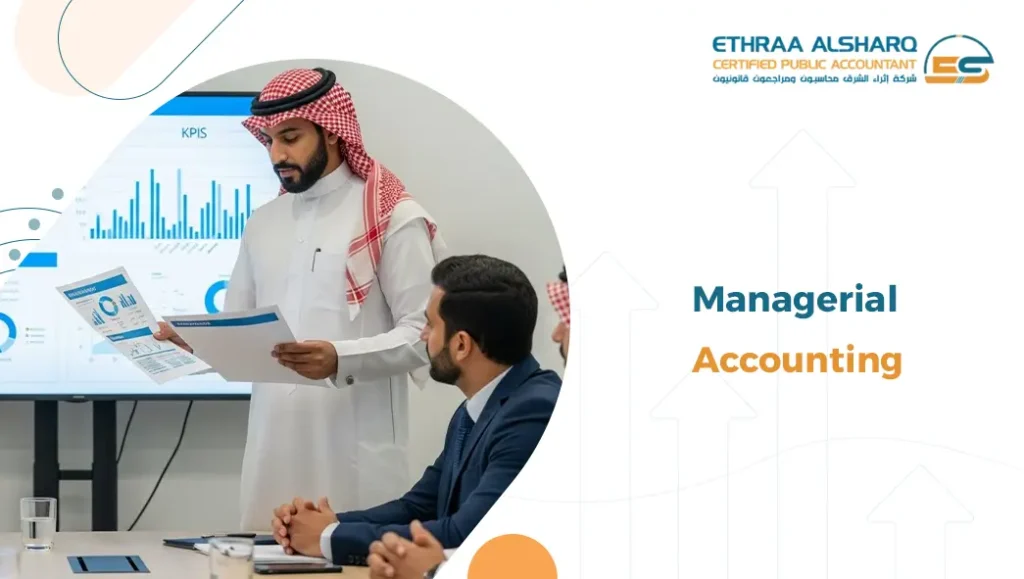
Key Performance Indicator (KPI) Reports: Show the achievement of strategic and operational goals and highlight areas that require improvement or development.
-
Analytical Reports for Projects and Investments: Focus on evaluating the feasibility of current and future projects, profitability analysis, and return on investment to support informed decisions.
-
Summary Financial Reports for Senior Management: Provide a comprehensive overview of the financial position without entering into the technical details of traditional financial accounting, with emphasis on strategic decision-making.
Through these reports, information becomes clearer and more actionable, enhancing the organization’s ability to make sound strategic decisions and ensure optimal resource utilization in a dynamic business environment.
Conclusion
Management accounting is more than a data collection system; it is a strategic tool that enables organizations in the Saudi market to achieve operational efficiency and sustainable profitability.
By applying advanced tools such as Activity-Based Costing (ABC) and the Balanced Scorecard (BSC), the accountant shifts from simply recording entries to becoming a strategic partner who guides investment and pricing decisions with precision.
With national emphasis on economic excellence, understanding and applying management accounting principles and tools is the determining factor between potential success and actual success, ensuring organizational growth aligned with the goals of Saudi Vision 2030 to increase efficiency and global competitiveness.
Frequently Asked Questions About Management Accounting
How does management accounting support Saudi Vision 2030?
It enhances the vision by improving spending efficiency, supporting decisions for major capital projects, and increasing organizational competitiveness through waste reduction and improved operational performance.
What is the most modern tool used in cost analysis?
Activity-Based Costing (ABC) is considered one of the most advanced tools. It enables more accurate allocation of indirect costs based on activities that actually consume resources, improving product and service profitability analysis.
What are the most important management accounting reports for senior management?
Senior management relies primarily on reports that provide a comprehensive and concise view, including KPI reports, Balanced Scorecard (BSC), and analytical reports for project and investment feasibility.