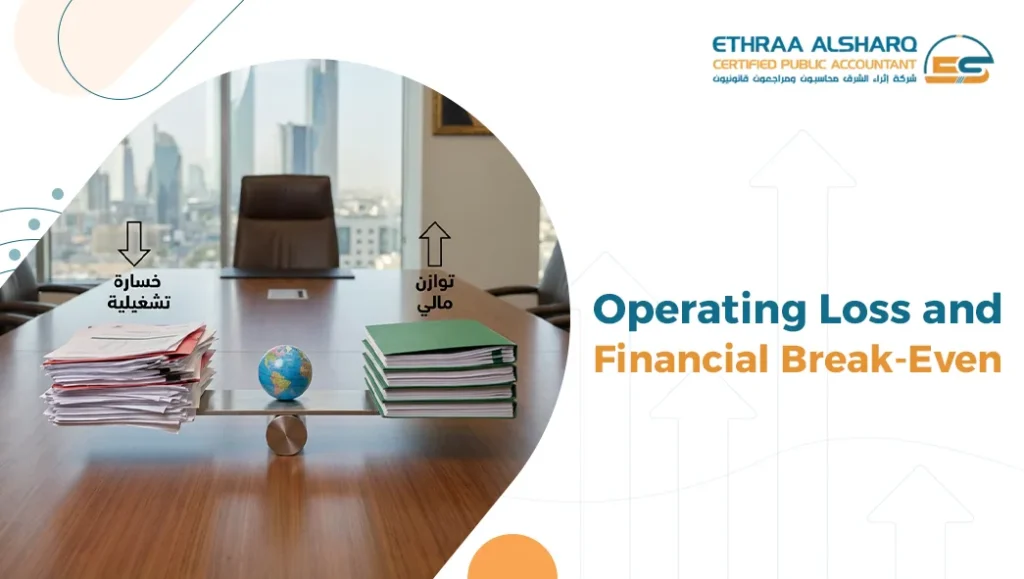
Operating Loss and How to Restore Financial Balance for Companies
Rapid economic changes cause businesses to face financial challenges that sometimes appear as operating losses. These losses do not necessarily indicate project failure but serve as early warning signals requiring a review of the core business activities, separate from non-recurring revenues or expenses.
In this article, we discuss the concept of operating loss, the main methods to address it, and highlight the shared responsibility between management and accountants to ensure sustainable growth.
What is Operating Loss?
An operating loss occurs when operating expenses (such as salaries, rent, raw material costs, and administrative expenses) exceed the gross profit generated from the company’s core activities.
In other words, it is the situation in which a business cannot cover its daily operational costs through sales. Analyzing operational performance is the key tool to identify whether the loss results from pricing issues, unjustified cost increases, or weak sales volume.
Causes of Operating Losses in Businesses
Operating losses arise from multiple factors, which vary across industries. Key contributors often include:
- High fixed and variable operating costs: Including rising rent obligations and increased payroll without proportional productivity gains.
- Declining revenues: Caused by weak sales or intensified market competition.
- Inefficient inventory management: Accumulation of slow-moving stock drains liquidity, while stock shortages lead to lost sales opportunities.
- Pricing and financial estimation errors: Relying on pricing strategies that do not cover actual costs.
- Low production efficiency: Resource wastage or outdated techniques increase unit costs.
Operational Performance Analysis: Identifying the Source of Loss
Addressing an operating loss requires accurately locating the cause. Financial analysis and operational reports serve as essential diagnostic tools.
Using Reports to Identify Loss Sources
By comparing actual data with budgeted figures, accountants can determine whether the loss originates from a specific department, production line, or geographic region. Variance analysis reports clarify whether the problem lies in sales volume or unit cost increases.
Key Performance Indicators (KPIs) Related to Operations
Successful companies monitor precise KPIs, including:
- Operating Profit Margin: Measures the percentage of profit remaining from every unit of revenue after covering operating costs.
- Operating Costs to Revenue Ratio: Indicates how efficiently the company manages expenses relative to its revenue.
Supporting Tools and Reports
ERP systems and periodic reports (weekly and monthly) provide management with detailed insights, facilitating regular analysis and corrective actions before financial gaps worsen.
Strategies to Reduce Costs and Improve Performance
Escaping operational losses requires smart strategies to reduce costs, such as:
- Restructuring operating expenses: Reviewing all expenditure items and classifying them by importance.
- Optimizing inventory and logistics management: Implementing just-in-time (JIT) supply systems to lower storage costs.
- Negotiating supplier contracts: Continuously seeking better payment terms or quantity discounts.
- Using technology to enhance efficiency: Investing in automation to reduce human errors and accelerate workflows.
Role of Management and Accountants in Handling Losses
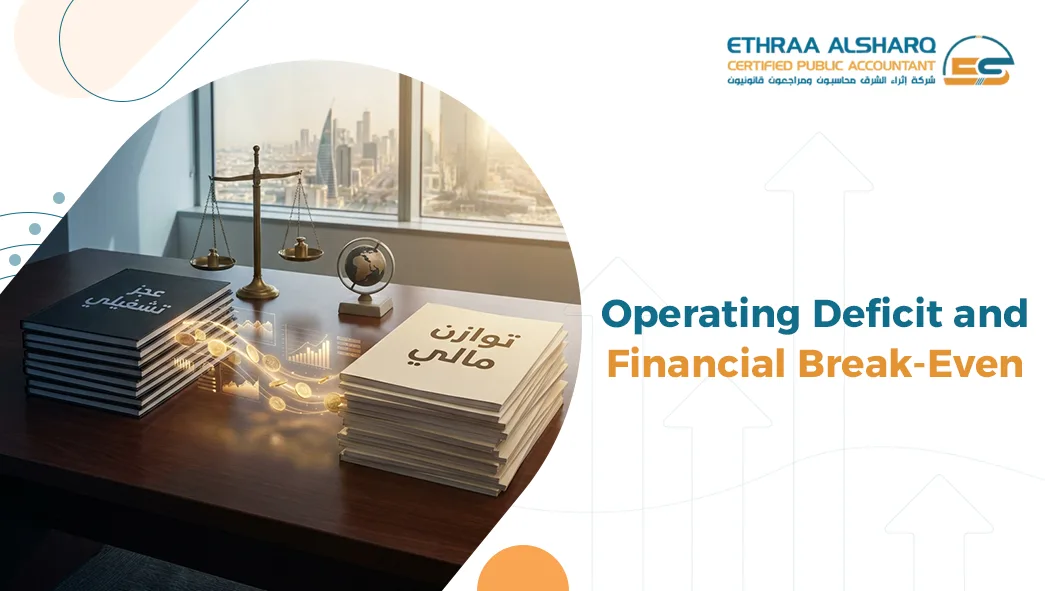
Addressing operational deficits requires collaboration between management vision and accounting accuracy:
Management’s Role
Strategic decision-making: Using reports to make tough choices, such as halting a loss-making line or restructuring workforce.
Promoting spending culture: Reinforcing value-for-cost principles across all company departments.
Accountant and Financial Advisor’s Role
Analysis and control: Early detection of budget deviations and alerting management before losses worsen.
Cost classification: Helping management identify expenses that can be eliminated without affecting product quality.
Ertiyaa Al-Sharq’s Role in Supporting Your Business
At Ertiyaa Al-Sharq Accounting and Professional Financial Consulting, we serve as your financial partner to overcome crises by:
- Preparing periodic operational performance analysis reports to detect inefficiencies accurately.
- Providing specialized financial consultancy on cost restructuring and efficiency improvement according to international standards.
- Developing flexible budgets that enable management to anticipate risks and control expenses proactively.
Operating loss is merely a number on the income statement. How management and accountants handle it determines the company’s future. Understanding loss causes and rigorously analyzing operational performance is the only path back to sustainable profitability.
Learn how to improve financial efficiency and reduce operating costs with Ertiyaa Al-Sharq’s accounting and auditing services, and explore innovative solutions supporting your business growth and sustainability.
Frequently Asked Questions About Operating Loss
Does an operating loss always mean company bankruptcy?
No. Many startups experience operating losses in their early years due to heavy growth investment. What matters is having a clear path to profitability.
How does professional auditing help prevent losses?
Regular audits detect financial leakage or poor resource management early, allowing immediate corrective actions.
What is the accountant/advisor’s role during an operating loss?
Advisors reassess the company’s financial model and propose cost-reduction solutions without compromising product or service quality.