In a fast-paced and highly regulated market like Saudi Arabia, organizing your accounts is not a luxury—it is a safeguard for every business.
The question of how to organize accounting books is not just about arranging paperwork; it is about building a system that gives you full control over your cash flows and protects you from legal risks.
In this article, we take you on a practical journey to organize your books from scratch and reach professional financial statements.
What is Organizing Accounting Books?
Organizing accounting books refers to structuring and classifying all financial data of a business according to standardized accounting and legal principles.
It is not just about recording numbers—it ensures that every financial transaction is properly tracked and categorized under the correct account (assets, expenses, or liabilities).
Proper organization transforms scattered invoices and receipts into a structured financial record that is easy to retrieve and presents a true picture of the company’s financial position to tax authorities and stakeholders.
Difference Between Bookkeeping and Organizing Accounting Books
Although closely related, there is a key difference between the two:
- Bookkeeping: A routine operational process focused on recording daily financial transactions and ensuring accuracy. It is the engine that feeds the system with data.
- Organizing accounting books: A structural and strategic process that defines how the system works. It includes designing the chart of accounts, setting documentation policies, and defining data flow.
In simple terms, organizing sets the rules, while bookkeeping follows them.
Why Do Some Companies Experience Disorganized Accounting Records?
Financial disorder often develops gradually due to:
- Unqualified staff: Assigning accounting tasks to non-specialists.
- Delayed recording: Not recording transactions immediately, leading to missing details.
- Lack of archiving policies: Poor document management systems.
- Mixing accounts: Combining personal and business expenses, distorting financial results.
Best Practices for Organizing Accounting Books
To maintain an accurate and efficient accounting system, follow these practices:
- Regular updates: Record transactions daily or weekly at most.
- Separation of accounts: Keep personal and business finances completely separate.
- User access control: Define clear roles within the accounting system.
- Data backup: Maintain regular backups to protect financial data.
- Proper documentation: Ensure every transaction is supported by valid documentation.
Steps for Organized Bookkeeping
To build a structured accounting system, follow these steps:
1. Design a Proper Chart of Accounts
The chart of accounts is the foundation of your accounting system. It defines how transactions are classified based on your business activity.
2. Standardize Transaction Recording
Establish clear accounting policies for handling purchases, returns, payroll, and other transactions to ensure consistency.
3. Maintain Organized Documentation
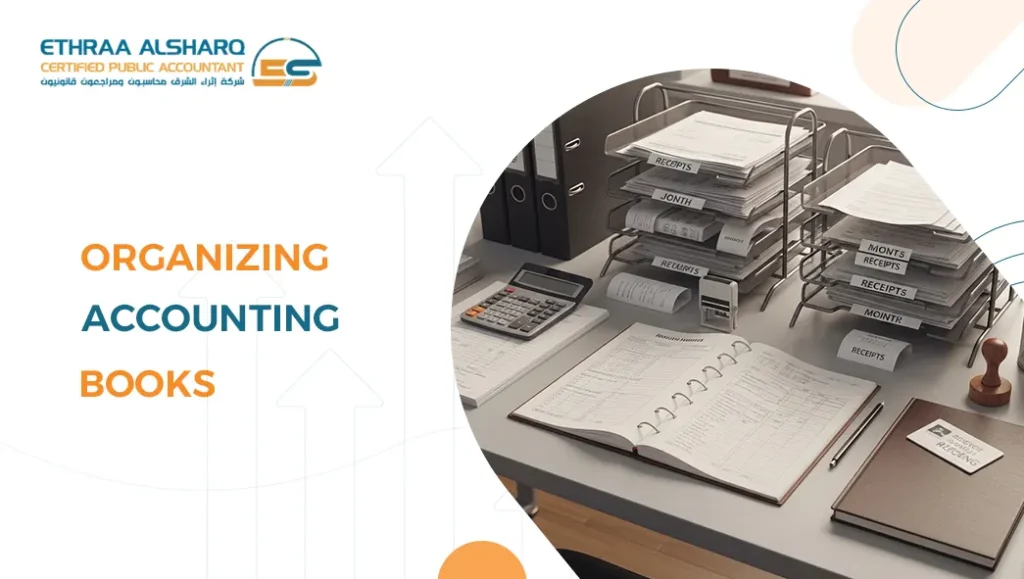
Create a strong archiving system (both physical and digital) to store invoices, contracts, and receipts for easy retrieval.
4. Perform Regular Reconciliations
Reconciliation ensures accuracy and includes:
- Bank reconciliation
- Cash verification
- Supplier and customer balance matching
5. Conduct Continuous Internal Reviews
Regular internal audits help detect errors early and reduce year-end adjustments.
6. Use an Electronic Accounting System
With digital transformation, using cloud-based accounting software is essential for automation, accuracy, and compliance with regulatory requirements.
Common Mistakes in Organizing Accounting Books
Avoid these frequent errors:
- Ignoring bank reconciliations: Leading to unexplained differences.
- Incorrect expense classification: Misclassifying assets as expenses or vice versa.
- Breaking chronological order: Recording transactions in incorrect periods.
- Weak petty cash control: Lack of proper documentation for small expenses.
- No data backup: Risking loss of financial records.
The Role of Ethraa Al Sharq in Supporting Your Business
At Ethraa Al Sharq, we go beyond consulting—we partner with you to organize your financial journey by:
- Setting up accounting systems from scratch.
- Restructuring disorganized records and correcting accumulated errors.
- Ensuring full readiness for tax and zakat audits.
Learning how to organize accounting books and applying proper bookkeeping practices is one of the smartest investments you can make for your business.
Numbers do not lie—and organized books reflect your success.
Frequently Asked Questions (FAQ)
What are the most common mistakes in organizing accounting books?
Mixing personal and business accounts, delaying transaction recording, and losing original documents are the most common issues.
Can accounting software replace an accountant?
Software is a powerful tool, but it still requires a professional accountant to ensure correct setup, accurate data entry, and proper financial analysis.