You may have established your company years ago, purchased assets, built inventory, and perhaps taken on debt along the way.
You likely have a general sense of what your business is worth. However, when you look at the accounting records, you may find a number that is completely different from what you expected — sometimes lower, sometimes higher.
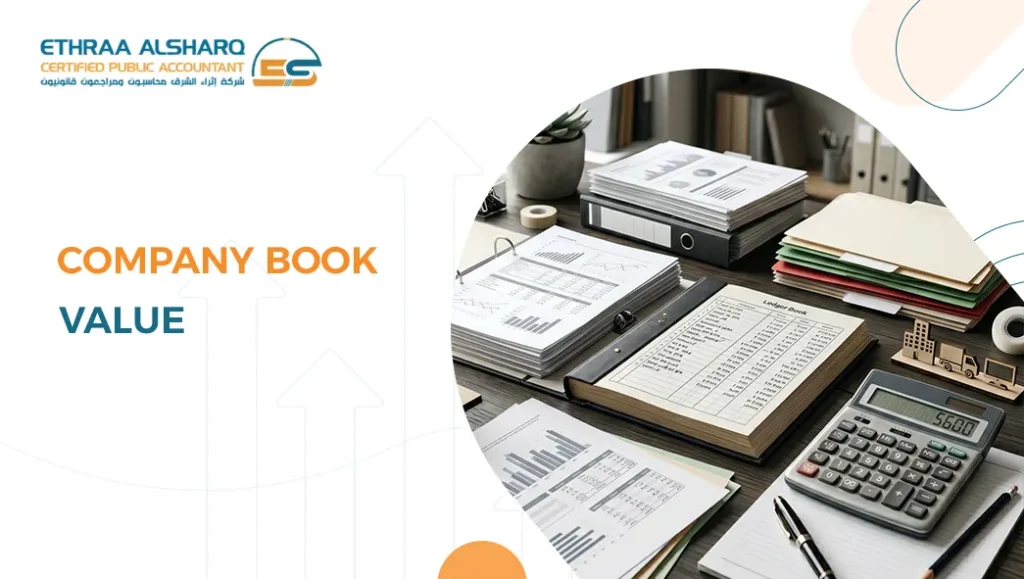
That number is known as the company’s book value. Simply put, it answers this question: if the company stopped operating today, paid all its debts, and sold all its assets at the values recorded in its books, how much would remain for the owners?
Book value is not an emotional estimate, nor is it a prediction of future potential. It is a financial snapshot of the company’s past and present, captured through accounting figures. In this article, we explain what book value includes, how it is calculated, and when you can rely on it — and when you should look beyond it.
What Is Book Value?
Book value represents the net value of a company’s assets recorded in its accounting books after deducting all liabilities and outstanding obligations. Theoretically, it reflects the amount shareholders would receive if the company were liquidated and all assets were sold at their historical accounting values.
Key Characteristics of Book Value
- Historical: It is based on the original purchase cost of assets after depreciation.
- Conservative: It does not include intangible value such as internally developed brands or goodwill unless acquired externally.
- A Safety Indicator: Investors like Warren Buffett often use book value as a minimum benchmark for evaluating a company’s worth.
How Is Book Value Calculated?
Book value is calculated directly from the company’s balance sheet and reflects the owners’ net wealth after settling all liabilities.
Basic Formula
Book Value = Total Assets – Total Liabilities
Understanding the Components
To calculate book value accurately, it is important to understand both sides of the equation.
Total Assets
Assets represent everything the company owns that has economic value, including:
- Fixed Assets: Such as land, buildings, and machinery, usually recorded at historical cost minus accumulated depreciation.
- Current Assets: Including cash, inventory, and accounts receivable.
- Intangible Assets: Such as patents and trademarks, which analysts often exclude when calculating tangible book value.
Total Liabilities
Liabilities include all financial obligations the company owes to others, including:
- Long-Term Liabilities: Such as bank loans and bonds due after more than one year.
- Current Liabilities: Including supplier balances, accrued salaries, taxes, and short-term debts.
The Result
The final figure represents shareholders’ equity. Dividing this number by the total outstanding shares gives the book value per share.
The Relationship Between Book Value and Shareholders’ Equity
Book value forms the foundation for analyzing shareholders’ equity and cannot be separated from it when evaluating any company.
The True Representation of Company Wealth
From an accounting perspective, book value is essentially the same as total shareholders’ equity. Analyzing it means examining the company’s real net worth.
Objective and Independent of Market Volatility
Because book value reflects what remains after liabilities are deducted from assets, it provides a more objective estimate of shareholder ownership compared to fluctuating stock market prices.
Measuring the Owners’ Actual Share
Book value answers a critical question: if the company were liquidated today, what portion belongs to shareholders? It reflects retained earnings, paid-in capital, and accumulated reserves.
Indicator of Financial Strength
A growing book value usually indicates that the company is successfully expanding its assets internally, creating a financial safety cushion that strengthens creditor confidence.
What Does Book Value Include?
Book value consists of a combination of financial and physical assets owned by the company after deducting obligations.
1. Fixed Assets
These are long-term investments acquired to operate the business rather than for resale.
Examples
- Real estate
- Buildings
- Production machinery and equipment
The Effect of Depreciation
These assets are not carried at their original purchase price forever. Annual depreciation reduces their book value over time to reflect usage and obsolescence.
2. Current Assets
These are assets expected to be converted into cash within one operating cycle.
Examples
- Cash balances
- Accounts receivable
- Inventory and raw materials
3. Capital and Shareholders’ Equity
These represent the company’s internally generated funding sources.
Owner Investments
Paid-in capital contributed by shareholders during formation or capital increases.
Retained Earnings
Profits retained within the company instead of being distributed, helping increase book value over time.
When Can Book Value Be Misleading?
Despite its importance, book value is not always a perfect representation of reality. Accounting rules and market conditions can sometimes distort the picture.
1. Overstated Asset Values
Assets may appear highly valuable on the balance sheet while their actual market value is much lower, especially if impairment losses are not recognized properly.
2. Hidden Liabilities
Some obligations, such as lawsuits or guarantees for affiliated entities, may exist outside the balance sheet, making shareholders’ equity appear stronger than it actually is.
3. Outdated Asset Values
Most assets are recorded at historical cost. A property purchased decades ago may still appear at its original price despite a massive increase in market value — or vice versa for obsolete equipment.
4. Ignoring Inflation
During periods of high inflation, accounting figures lose accuracy because book value does not reflect changes in purchasing power or replacement costs.
How Can You Improve Your Company’s Book Value?
Improving book value is not merely an accounting exercise — it reflects stronger operational and financial performance.
1. Increase Retained Earnings
Retained earnings are one of the strongest drivers of book value growth. Reinvesting profits instead of distributing them increases shareholders’ equity over time.
2. Reduce Liabilities
Because book value equals assets minus liabilities, reducing debt directly improves net equity.
3. Improve Asset Management
Dispose of underperforming or non-productive assets and redirect resources toward high-quality, revenue-generating investments.
4. Revalue Assets When Appropriate
Under standards such as International Financial Reporting Standards, companies may revalue certain assets like real estate to reflect fair market value rather than historical cost.
How Ithraa Al Sharq Supports You
At Ithraa Al Sharq, we help companies transform financial figures into strategic investment decisions through specialized financial solutions.
Accurate Equity Analysis
We examine shareholders’ equity components to ensure financial statements accurately reflect the company’s true position.
Clear Financial Reporting
We convert complex accounting data into professional reports that simplify financial understanding for management and investors.
Investment and Valuation Support
We provide valuation consulting services based on accurate financial models to determine fair company value.
Financial Structure Optimization
We help restructure assets and liabilities to strengthen book value and improve creditworthiness.
Book Value as a Strategic Financial Indicator
Book value remains one of the most important measures for evaluating financial solvency and determining the minimum liquidation value of a company.
Understanding the relationship between market value and accounting value helps investors and analysts assess risks realistically rather than relying on speculation.
Whether you are evaluating an acquisition opportunity or analyzing a stock portfolio, carefully reviewing shareholders’ equity provides a stronger foundation for investment decisions.
At Ithraa Al Sharq, we provide integrated solutions for equity analysis and company valuation according to the highest accounting standards. Contact our experts today to discover the real value of your assets and identify the strengths and weaknesses within your balance sheet.
Frequently Asked Questions (FAQ)
What Is Book Value?
Book value represents the total value of company assets owned by shareholders after deducting all liabilities and obligations. It appears on the balance sheet as shareholders’ equity.
How Is It Different from Market Value?
Book value reflects historical accounting costs, while market value reflects the current stock price based on investor demand and future growth expectations.
Does Book Value Reflect True Company Value?
Not always. It may underestimate value if the company owns strong intangible assets or undervalued real estate, or overestimate value if recorded assets are outdated.
How Is Book Value Used in Stock Analysis?
Analysts commonly use the Price-to-Book Ratio (P/B Ratio). A stock trading below book value may indicate either an undervalued opportunity or underlying financial problems.
Do Small Businesses Need to Calculate Book Value?
Absolutely. Book value helps owners, investors, and lenders understand the company’s real financial strength beyond personal assumptions or emotional estimates.