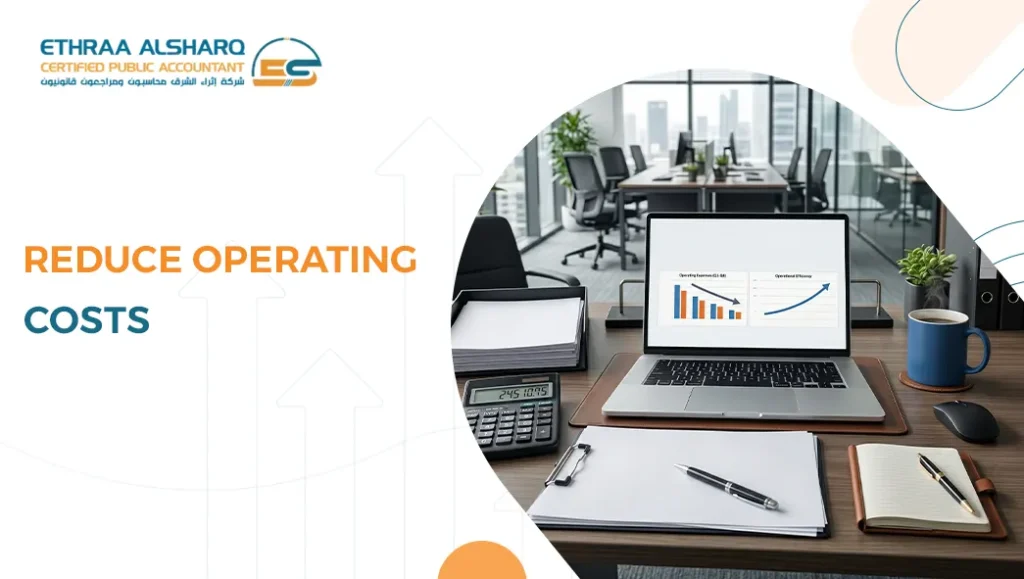
Many companies suffer from hidden financial leakage within their operating expenses, which negatively affects profit margins even when sales figures are high.
What Are Operating Costs?
Operating costs are the total expenses a company incurs to maintain its daily operations and core business activities. These expenses include items such as office rent, employee salaries, utility bills (electricity and water), maintenance costs, and marketing expenses.
Understanding these costs is the first step toward controlling cash flow and achieving the desired profitability.
Why Do Companies Fail to Control Costs?
Controlling expenses requires institutional discipline, yet many companies fail because they lack a clear methodology. The most common reasons include:
- Lack of expense analysis: Not knowing exactly where every riyal goes makes it impossible to identify areas of waste.
- Relying on assumptions instead of numbers: Making financial decisions based on personal expectations rather than actual data.
- Lack of clear financial reports: Failing to review budgets and financial results regularly hides problems before they escalate.
- Unplanned expansion: Increasing operating expenses by opening new branches or services without studying the actual return on investment.
How to Reduce Operating Costs
To transform cost management from a challenge into a competitive advantage, companies should adopt a structured and sustainable approach focused on efficiency through the following steps:
1. Analyze Expenses Accurately
You cannot manage what you cannot measure. The first step is conducting a comprehensive review of all expenses:
- Classify costs: Divide expenses into fixed costs (such as rent) and variable costs (such as raw materials) to determine what can be reduced immediately.
- Identify waste areas: Review unused subscriptions, excessive petty cash expenses, and high utility costs.
2. Adopt Technology and Automation
Investing in technology means investing in lower future costs:
- Automate operations: Using ERP and accounting systems reduces human errors and lowers manual labor costs.
- Cloud solutions: Moving toward cloud storage reduces server and physical maintenance expenses.
3. Renegotiate Contracts and Suppliers
Purchasing is one of the largest spending categories, so companies should:
- Compare prices regularly: Do not rely on a single supplier. Always search for alternatives with similar quality and better pricing.
- Bulk purchase agreements: Negotiate quantity discounts to lower the cost per unit.
4. Improve Workforce Productivity
Productive employees are an indirect source of savings for the company:
- Continuous training: Improving employee skills means completing more tasks in less time with fewer mistakes.
- Flexible work policies: Reducing office space through remote work significantly lowers rent and utility costs.
Common Mistakes When Trying to Reduce Costs
Many companies make serious mistakes when attempting to cut expenses without a strategic plan. Common mistakes include:
- Reducing costs randomly: Cutting expenses without analyzing how each item affects overall productivity.
- Eliminating essential operational resources: Removing necessary tools or resources under the excuse of saving money.
- Ignoring the impact on quality: Focusing only on reducing expenses while delivering poor products or services that damage the company’s reputation and sales.
- Relying on short-term solutions: Making decisions that save small amounts today but create larger maintenance costs or losses in the future.
How Does Cost Management Affect Your Company’s Profitability?
Effective cost management is a key pillar of sustainable profitability because it directly strengthens the company’s financial position through:
- Increasing profit margins: Every unnecessary expense reduced becomes direct net profit added to the company’s budget.
- Improving cash flow: Smart management ensures sufficient liquidity to meet obligations on time without disruption.
- Reducing financial risks: Controlling expenses makes the company more flexible and capable of handling unexpected economic fluctuations.
- Supporting future expansion: Financial surpluses created through efficient spending provide self-financing opportunities for growth and development.
How Ithraa Al Sharq Helps Improve Your Profitability
At Ithraa Al Sharq, we work as a strategic partner to transform your financial system from a simple record-keeping function into a driver of growth through:
- Expense analysis: Conducting detailed reviews of all spending categories to identify financial leakage and eliminate unnecessary costs.
- Financial reporting: Providing accurate dashboards and periodic reports that reflect the company’s true financial position, enabling management to make fact-based decisions.
- Budget planning: Helping design realistic budgets for each department or project to ensure efficient allocation of financial resources.
- Variance monitoring: Implementing strict monitoring systems that compare actual performance with planned targets, allowing quick intervention before financial problems escalate.
Are you ready to review your company’s expenses and increase profitability? Contact us today and let us begin your financial improvement journey together.
Frequently Asked Questions
What Is the Best Way to Reduce Costs?
Start by analyzing expenses thoroughly, then reduce waste without affecting operational quality.
Does Reducing Costs Affect Work Quality?
If done randomly, yes. However, when based on accurate analysis, cost reduction can improve efficiency without harming quality.
What Is the Difference Between Cost Reduction and Efficiency Improvement?
Cost reduction focuses on lowering spending, while efficiency improvement focuses on achieving better results with the same level of cost.