Have You Ever Wondered What Lies Behind the Financial Stability of Major Companies?
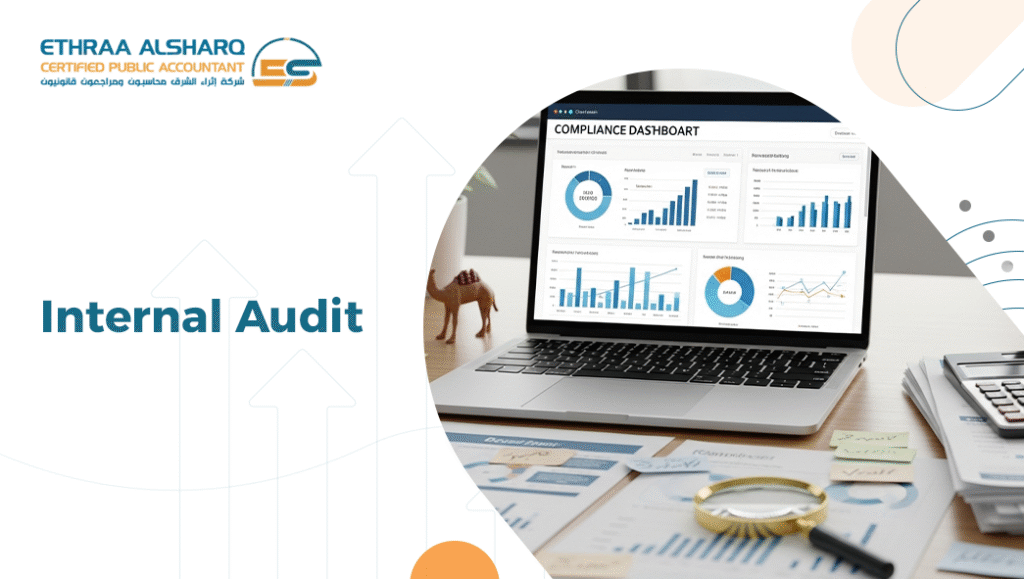
The answer often lies in the effectiveness of internal auditing. It serves as the compass that maintains balance between operational performance and regulatory compliance, making it one of the most essential pillars of internal governance within companies in Saudi Arabia.
With the ongoing digital transformation and continuous evolution of the Saudi Companies Law, internal auditing has become more important than ever. It plays a critical role in protecting assets, identifying weaknesses, and enhancing transparency within the business environment.
Through the professional implementation of internal audit procedures, organizations of all sizes can achieve full compliance and improve the quality of their financial and administrative decisions.
In this article, we explore the concept of internal auditing, its importance in the Saudi market, and the role of accounting firms in supporting businesses through integrated audit services that ensure trust and sustainability.
What Is Internal Auditing?
Internal auditing is defined as an independent and objective activity aimed at evaluating and improving the effectiveness of governance, risk management, and internal control processes within an organization.
According to the Institute of Internal Auditors (IIA), internal auditing is an independent assurance and consulting function designed to add value and improve organizational operations by providing a systematic approach that helps achieve business objectives.
This definition accurately reflects the true role of internal auditing within the Saudi regulatory environment, where it combines proactive oversight with strategic advisory support for executive management.
Internal auditing is therefore not merely a control function; it is a strategic tool that contributes to enhancing transparency, compliance, and organizational sustainability within every company.
Importance of Internal Auditing for Companies in Saudi Arabia
Internal auditing is considered a fundamental tool for ensuring the integrity of financial and administrative activities within organizations. Its strategic importance includes:
- Enhancing internal governance through effective control systems that support transparency and accountability within the organization.
- Evaluating internal risks by analyzing operational and financial risk sources and providing recommendations to mitigate them.
- Improving operational controls through reviewing policies and procedures and ensuring departments adhere to them effectively.
- Independent verification of the accuracy of financial information and accounting records free from managerial influence.
- Supporting decision-making by providing reliable data that assists senior management in strategic planning and development.
- Strengthening compliance with the Saudi Companies Law and related accounting and tax standards.
- Improving organizational efficiency through periodic reviews of company operations and enhancing overall performance.
From this perspective, the role of the internal auditor extends beyond simply reviewing financial records. It also includes evaluating internal control systems, analyzing risks, and ensuring compliance with approved policies, procedures, and regulations.
Responsibilities of the Internal Auditor
The internal auditor plays a pivotal role in ensuring operational efficiency and transparency within the organization. Key responsibilities include:
- Evaluating internal control systems and ensuring their effectiveness in protecting company assets and preventing fraud or waste.
- Analyzing operational and financial risks and providing preventive recommendations to address them.
- Reviewing compliance with internal policies, procedures, and relevant governmental regulations.
- Assessing financial and administrative performance and proposing opportunities for improvement and development.
- Preparing periodic audit reports and submitting them to executive management or the audit committee to support strategic decision-making.
Through these responsibilities, the internal auditor contributes significantly to enhancing transparency, corporate governance, and the sustainability of financial and administrative performance.
Types of Internal Auditing
Internal audit activities vary to cover all critical operations within an organization, allowing executive management to obtain comprehensive and independent evaluations of performance and compliance through several primary categories:
Operational Audit
Examines the efficiency and effectiveness of daily activities and operational processes within departments, aiming to improve resource utilization and reduce financial and administrative waste.
Financial Audit
Reviews accounting records and entries to verify the accuracy of documented information and ensure the reliability of periodic financial reports before final approval.
Compliance Audit
Verifies the organization’s compliance with local laws, regulations issued by regulatory authorities in Saudi Arabia, and approved internal policies.
Information Technology Audit
Evaluates the integrity of IT systems and software, while assessing data protection and cybersecurity measures to ensure business continuity and prevent data breaches or cyberattacks.
Risk Audit
Analyzes and identifies potential threats facing the organization within the business environment and develops proactive plans to minimize their impact on company stability and sustainability.
Difference Between Internal and External Auditors
Internal and external auditors are sometimes confused, despite each playing a distinct role that complements the other within the corporate governance framework:
| Comparison | Internal Auditor | External Auditor |
|---|---|---|
| Affiliation | Works within the organization as part of its structure | Independent entity appointed by shareholders or owners |
| Main Objective | Improve performance, internal controls, and compliance | Provide an independent opinion on the fairness of financial statements |
| Scope | Covers all operational, financial, and administrative activities | Focuses mainly on financial statements and compliance with accounting standards |
| Reporting | Reports to executive management or the audit committee | Reports to shareholders or regulatory authorities |
| Frequency | Continuous and periodic throughout the year | Usually conducted annually after the fiscal year-end |
Through the integration of both internal and external auditing, organizations in Saudi Arabia can achieve the highest levels of transparency, compliance, and governance effectiveness.
Internal auditing in Saudi Arabia is also governed by approved professional standards that ensure it is performed using a systematic and professional methodology.
To improve internal control systems and strengthen financial performance within your company, explore account auditing services and discover how these solutions can support internal audit operations within your organization.
Internal Audit Standards in Saudi Arabia
Internal auditing in the Kingdom of Saudi Arabia is based on the International Standards for the Professional Practice of Internal Auditing (IIA), adopted by the Saudi Association of Internal Auditors and aligned with local regulatory requirements.
These standards aim to ensure transparency, independence, and enhance the efficiency and reliability of internal audit activities within organizations.
Key Standards Include:
Independence and Objectivity:
Ensuring that the internal auditor remains impartial when evaluating operations, without influence from management or personal interests.
Professional Competence:
Maintaining technical knowledge and ongoing development in accounting, governance, and risk management.
Structured Methodology:
Following an annual audit plan built on risk assessment with clear priorities.
Documentation and Quality:
Preparing accurate and comprehensive audit reports that clearly reflect findings, in line with post-audit review processes.
Confidentiality and Integrity:
Safeguarding internal information and using it solely for audit purposes.
These standards form the framework that ensures an effective and independent internal audit function, strengthening management and investor confidence in its outcomes.
By adhering to these professional standards, companies in Saudi Arabia ensure that internal auditing is conducted in an organized manner that promotes transparency and accuracy at every stage—leading us to the practical procedures applied within organizations.
Internal Audit Procedures in Saudi Arabia
Internal auditing is carried out through structured steps aligned with the standards issued by the Saudi Association of Internal Auditors and the Institute of Internal Auditors (IIA), ensuring objectivity and high quality.
These procedures typically include:
1. Defining the Audit Scope and Objectives
Identifying targeted departments or processes, with clear goals such as evaluating compliance or assessing financial and operational efficiency.
2. Data Collection and Risk Analysis
Studying the work environment, gathering financial and administrative data, and analyzing potential risks that may affect achieving objectives.
3. Developing and Executing the Audit Plan
Preparing a detailed plan covering tasks, timelines, teams, and tools, followed by fieldwork and document review.
4. Preparing Reports and Findings
Documenting results in a report that includes strengths, weaknesses, and actionable recommendations to improve performance and control.
5. Follow-Up on Recommendations
One of the most crucial phases involves verification of management’s commitment to implementing recommendations and monitoring their impact on efficiency and risk reduction.
The Role of Accounting Firms in Supporting Internal Audit
Accounting firms play a critical role in developing and enhancing internal audit systems, providing technical expertise to ensure compliance with professional standards and relevant Saudi regulations.
Specialized firms do more than just auditing—they help design strong internal control environments, develop policies and procedures, and detect risks early before they impact financial performance or corporate reputation.
Ethraa Al Sharq Accountants & Auditors is among the leading firms in this field, offering integrated professional solutions including:
-
Establishing internal audit units and defining their authorities based on Saudi governance standards.
-
Preparing audit manuals and control templates to standardize internal audit procedures.
-
Evaluating internal audit performance and measuring effectiveness in risk management and compliance.
-
Providing specialized consulting to enhance the competence of audit teams and improve report quality.
Through the expertise of Ethraa Al Sharq Accountants & Auditors, organizations can strengthen their control systems and build a transparent, compliant work environment that supports long-term business sustainability and enhances trust among stakeholders and regulators.
Frequently Asked Questions About Internal Auditing
What is the main purpose of internal auditing?
To evaluate internal control systems, risk management, and regulatory compliance, while providing recommendations to improve efficiency and transparency.
What is the difference between an internal auditor and an external auditor?
An internal auditor works within the organization continuously to enhance performance and compliance, whereas an external auditor is an independent party appointed to assess the accuracy of financial statements.
Is internal auditing mandatory in Saudi Arabia?
Yes, for joint-stock companies and large entities subject to governance requirements. It is also recommended for all organizations to promote transparency and reduce financial and operational risks.
What standards govern internal auditing in the Kingdom?
The International Internal Audit Standards (IIA) and the standards adopted by the Saudi Association of Internal Auditors, ensuring quality and independence.
How does Ethraa Al Sharq Accountants & Auditors support internal auditing?
The firm provides professional solutions including establishing audit departments, evaluating control systems, and offering consulting and training to ensure compliance with both local and international standards.
Conclusion
Internal auditing in Saudi Arabia is a cornerstone of corporate governance—far beyond a simple compliance exercise, it is a comprehensive system that ensures transparency, regulatory alignment, and effective risk management.
By applying the standards adopted by the Saudi Association of Internal Auditors (IIA) and following structured professional procedures, companies can achieve sustainable financial and operational performance.
Partnering with a specialized accounting firm such as Ethraa Al Sharq Accountants & Auditors enhances internal audit effectiveness through integrated solutions that include building control units, evaluating performance, and providing expert consultation to ensure the highest levels of trust and institutional stability.