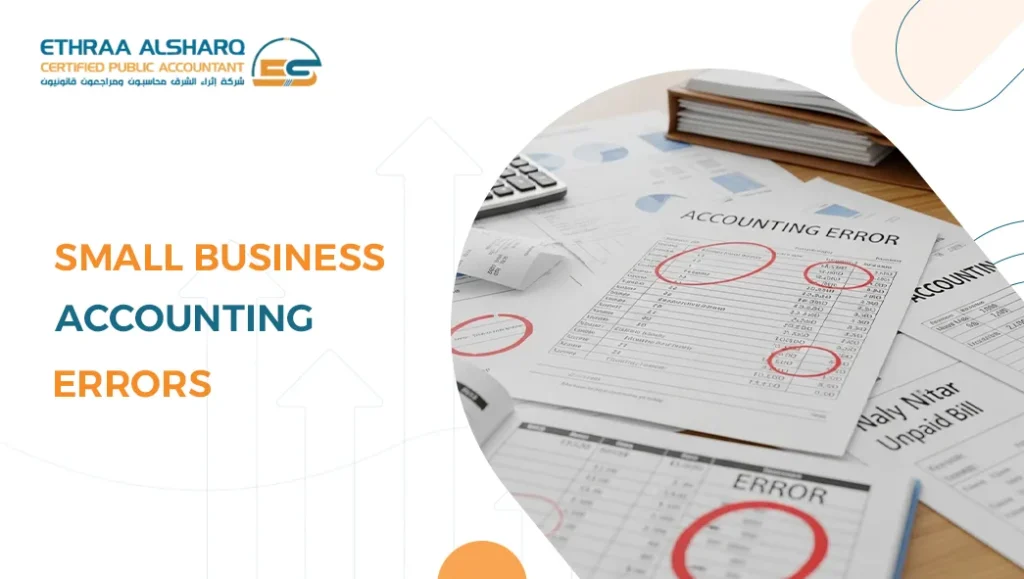
Many business owners believe that increasing sales automatically means business success. However, reality can often be quite different. A company may experience promising growth, yet when the owner sits down to understand where the money is going, they struggle to track expenses, discover unrecorded invoices, and find figures that do not match reality.
This situation is more common than many realize—not because small business owners are negligent, but because the transition from I manage everything myself to I need a proper system usually happens later than it should.
The accounting mistakes that accumulate during this transition period are precisely what can turn promising growth into unexplained cash flow crises.
What Is Financial Management for Small Businesses?
Financial management is far more than simply recording numbers. It is a comprehensive and systematic process aimed at tracking, recording, and classifying all financial transactions carried out by a business.
For small businesses, financial management includes monitoring incoming cash flows (sales and investments) and outgoing cash flows (purchases, salaries, and rent), as well as preparing balance sheets and periodically measuring financial performance.
Simply put, it is the mirror that reflects the health of your business. Without it, a company operates in financial darkness. With it, business owners gain the clarity needed to make decisions based on facts rather than assumptions.
Why Do Small Businesses Face Financial Problems Despite Strong Sales?
Many business owners are puzzled when they see high sales figures yet struggle to meet their current obligations. This often happens due to several fundamental reasons:
Poor Expense Control
Money leaks into unnecessary expenditures, or the absence of an expense approval process erodes profit margins regardless of how high sales may be.
Lack of Accurate Financial Reporting
Operating without periodic reports such as the Income Statement and Cash Flow Statement prevents management from understanding the true costs hidden behind every sale.
Relying on Intuition Instead of Numbers
Making expansion or purchasing decisions based on a feeling of success rather than actual financial indicators exposes the business to unnecessary risks.
Understanding these factors is the first step toward solving small business financial problems and ensuring that sales are translated into sustainable profits in the company’s bank account.
Common Accounting Mistakes to Watch Out For
Awareness of recurring accounting pitfalls is the first step toward preventing sudden financial distress. The following are among the most common mistakes made by small businesses.
1. Mixing Personal and Business Finances
This is one of the most common mistakes among startup owners.
When a business owner withdraws money from the company’s cash register to pay personal rent or uses a personal credit card to purchase business materials, they undermine the company’s legal and financial identity.
Impact:
- Difficulty tracking actual profits.
- Major complications when filing zakat and tax returns.
Solution:
Open a separate business bank account and pay yourself a fixed monthly salary as the business manager.
2. Failing to Record Expenses Immediately
Some business owners believe that storing invoices in a desk drawer or relying on memory is sufficient. In reality, small missing receipts accumulate into significant unrecorded amounts by year-end.
Impact:
- Loss of deductible expenses.
- Higher zakat and tax liabilities than necessary.
Solution:
Use invoice-scanning applications immediately upon receiving receipts and connect them directly to your cloud accounting system.
3. Relying Entirely on Excel and Ignoring Automation
While spreadsheets are flexible, they are vulnerable to human error and lack the real-time updates required for effective decision-making.
Impact:
- Outdated or inaccurate accounting information.
- Difficulty generating timely management reports.
Solution:
Adopt cloud-based accounting systems that integrate with banks and business platforms while updating financial data automatically.
4. Neglecting Regular Bank Reconciliations
Bank reconciliation is the process of verifying that the bank balance in your accounting records matches the actual bank balance.
Delaying this process until year-end is a serious financial risk.
Impact:
- Failure to detect unauthorized withdrawals.
- Overlooked bank charges.
- Uncashed checks.
- Misleading cash flow information.
Solution:
Perform bank reconciliations weekly or at least monthly.
5. Poor Cash Flow Management
A company may generate strong sales and still fail because cash is unavailable due to funds being tied up in customer receivables.
Failing to distinguish between accounting profit and actual cash flow is one of the most common financial mistakes.
Impact:
- Inability to pay salaries or suppliers despite strong sales performance.
Solution:
Develop cash flow forecasts for upcoming months and actively manage receivable collections.
How Do These Mistakes Affect Business Stability?
The consequences of weak financial management extend far beyond accounting records. They directly affect a company’s stability and threaten its long-term sustainability through several serious outcomes:
Poor Financial Decisions
The absence of accurate financial data can lead to misguided investments or incorrect product pricing strategies, ultimately draining company resources.
Unexpected Cash Flow Crises
Poor cash management may leave a company unable to meet immediate obligations such as payroll or rent payments, even when accounting profits appear healthy.
Difficulty Expanding or Securing Financing
Banks and investors are reluctant to provide funding to businesses with disorganized accounting records, limiting growth opportunities and expansion plans.
Tax Issues and Penalties
Errors in financial reporting can lead to non-compliance with local regulations, exposing the company to legal violations and costly financial penalties.
When Do You Need a Professional Accountant?
Managing accounts may seem simple at first, but there are critical moments when professional financial expertise becomes essential.
Lack of Profit Visibility
If sales are increasing but you cannot determine where the cash is going or what your actual net profit is, professional support is necessary.
Financial Discrepancies
When inconsistencies arise between bank balances and accounting records, or when expense documentation is incomplete.
Tax and Zakat Challenges
If you face difficulties preparing tax returns or receive compliance notices from regulatory authorities.
Rapid Business Growth
Fast expansion increases operational complexity and requires a strong financial structure capable of supporting sustainable growth.
How Ithraa Al Sharq Supports Small Business Accounting
Ithraa Al Sharq provides comprehensive financial solutions specifically designed for small and medium-sized businesses. We act as your financial partner, helping ensure stability and growth through:
Accounting Organization
We build a structured chart of accounts and professionally classify financial transactions, eliminating disorder from daily bookkeeping activities.
Financial Reporting
We provide periodic financial reports, including:
- Income Statements
- Statements of Financial Position
- Cash Flow Statements
These reports give you a clear understanding of your business performance and reveal the true financial results of your operations.
Performance Analysis
We go beyond presenting numbers by analyzing financial data to identify inefficiencies and profitability opportunities, helping improve business performance.
Tax Compliance Support
We ensure full compliance with Zakat, Tax, and Customs Authority requirements and prepare accurate returns to minimize the risk of penalties.
Turning Data into Decisions
We help you understand the language of numbers and transform financial reports into strategic insights that support expansion, investment, and growth decisions.
Don’t Let Accounting Mistakes Stand in the Way of Your Ambitions
Focus on growing your business and leave the responsibility of maintaining your financial stability to us.
Contact us today for an initial assessment of your accounting system and financial position.
Frequently Asked Questions (FAQ)
What Are the Most Common Accounting Mistakes in Small Businesses?
The most common mistakes include mixing personal and business expenses, failing to maintain backup copies of invoices, and delaying bank reconciliations. These issues often lead to inaccurate financial records and loss of financial control.
Can a Business Manage Its Accounts Without an Accountant?
In the very early stages, basic accounting software may be sufficient. However, as the business grows and tax and zakat obligations become more complex, hiring a professional accountant or working with a specialized firm such as Ithraa Al Sharq becomes essential to avoid costly financial and legal mistakes.
How Can You Start Organizing Your Company’s Accounts?
Begin by opening a separate business bank account. Then choose a cloud-based accounting system suitable for your business size and ensure every financial transaction is recorded immediately. Ideally, seek professional advice to establish a proper chart of accounts from day one.
Why Are Financial Reports Important for Decision-Making?
Financial reports such as the Income Statement and Cash Flow Statement provide accurate insights into profitability and available liquidity. This information helps determine whether it is the right time to expand, reduce costs, or adjust pricing strategies.
How Can I Control Company Expenses?
Expense control can be achieved by establishing a monthly budget, implementing a purchase approval process before spending occurs, and regularly reviewing financial reports to compare actual expenses against planned expenditures. This approach significantly reduces financial waste and improves profitability.