VAT on Real Estate

Value Added Tax (VAT) on Real Estate

Are you a real estate investor or property owner? Understanding the complexities of VAT on real estate is no longer optional  it has become a fundamental pillar for protecting your investment profitability and maintaining full legal compliance.

With the major regulatory transformations taking place in the Saudi real estate market, distinguishing between Value Added Tax (VAT) and Real Estate Transaction Tax (RETT) has become essential in determining the final cost of any property deal.

In this article, we provide you with a clear roadmap that summarizes the current tax framework for real estate transactions. Ignorance of tax regulations can cost you your valuable investment, so let us begin a comprehensive journey to ensure full compliance and maximize opportunities within Saudi Arabia’s thriving real estate sector.

What Is VAT on Real Estate?

Value Added Tax (VAT) on real estate in Saudi Arabia is an indirect tax imposed on the sale and lease of commercial properties and related services such as development, construction, renovation, and other real estate activities.

Its purpose is to regulate the real estate market and enhance financial transparency. The applicable rates and exemptions differ depending on the type of property, whether it is residential for personal use or commercial for investment purposes.

The Difference Between VAT and Real Estate Transaction Tax

Confusion between VAT and Real Estate Transaction Tax is one of the most common challenges facing investors. Understanding the fundamental difference between them is essential to avoid costly financial mistakes.

1. Value Added Tax (VAT)

VAT is a tax on commercial activity. It is added to the value of the service or property and is imposed at a rate of 15% on real estate supplies related to economic and commercial activities.

If the property owner is VAT-registered, they are responsible for collecting the tax and remitting it to the authority.

2. Real Estate Transaction Tax (RETT)

RETT is a one-time property transfer tax paid upon documenting the real estate transaction. It serves as the primary tax framework for residential properties that are exempt from VAT.

This tax is imposed at a rate of 5% on property ownership transfers (sales transactions), targeting the property itself regardless of the nature of the business activity.

Understanding the difference between these two taxes is crucial because it enables investors to accurately calculate tax obligations and include them in financial planning, ensuring investment decisions are free from unexpected surprises

VAT on Real Estate

When Does VAT Apply to Real Estate in Saudi Arabia?

To ensure full tax compliance and avoid unexpected financial liabilities, it is important to understand the situations in which a real estate transaction is considered a commercial activity subject to 15% Value Added Tax (VAT):

  • Commercial property sales: The sale of buildings or land designated for commercial use or investment purposes.
  • Commercial leasing: All leasing activities related to offices, retail stores, warehouses, and hotels.
  • Real estate development: Activities related to construction, renovation, or preparing properties for commercial sale or lease.

Stages of Applying VAT on Real Estate

The application of VAT on real estate transactions follows several organized stages designed to ensure transparency and facilitate compliance for taxpayers and investors. The Zakat, Tax and Customs Authority (ZATCA) has established a clear framework for applying the tax, starting from registration through to the final tax filing.

First: Registration in the Tax System

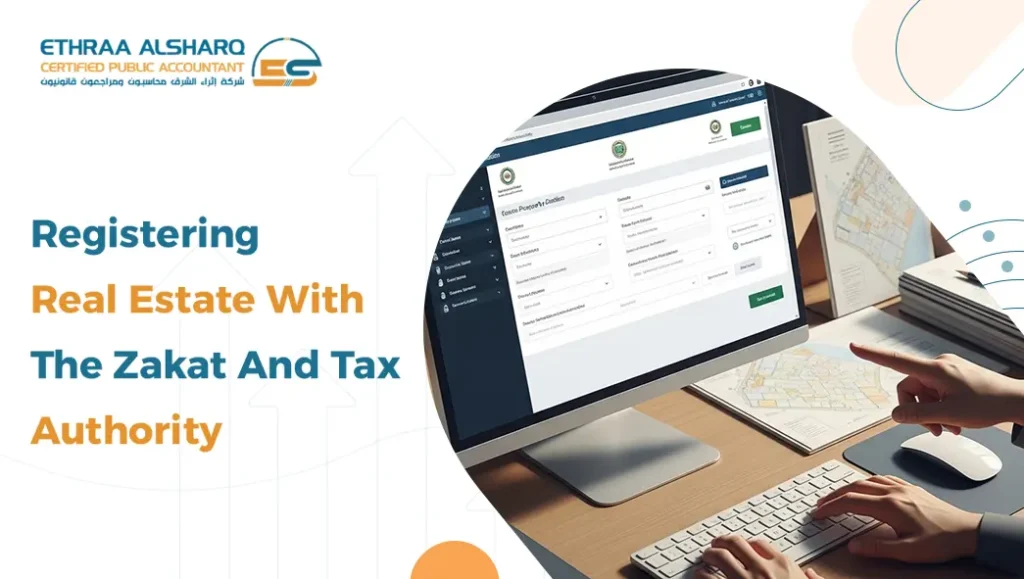
The process begins with registering both the taxpayer and the property with ZATCA. This is an essential step for issuing tax invoices and including transactions within periodic tax returns.

The purpose of registration is to connect all real estate transactions to the official tax system, making it easier to monitor sales and purchases, issue electronic invoices, and submit accurate tax returns on time.

Registration is also a key requirement for qualifying for real estate tax refunds in cases permitted by the regulations, such as first-home purchases.

Registration Steps

  • Access the electronic portal of the Zakat, Tax and Customs Authority.
  • Select the property registration service or VAT registration service.
  • Enter the owner and property details (title deed number, usage type, value, and transaction type).
  • Upload the required documents and submit the application for review.
  • After approval, the taxpayer receives a tax registration certificate containing a unique registration number used in all invoices and transactions.

After registering the property, the taxpayer must submit periodic tax returns and retain all financial records and invoices for at least five years in case of future reviews or audits by the authority.

Second: Determining the Type of Transaction — VAT-Exempt Properties

Not all real estate transactions in Saudi Arabia are subject to VAT. ZATCA has identified several cases where properties are exempt from tax in order to support residential stability and reduce financial burdens on individuals.

Residential Properties for Personal Use

Properties designated for permanent residential use by citizens and their families are exempt from VAT, such as purchasing or building a first home, under the government initiative that covers VAT on the first SAR 1 million of the property value.

Properties Owned Before VAT Implementation

If a property was purchased or a sale agreement was signed before the implementation date of the VAT system, the transaction is considered exempt, provided no modifications convert it into a commercial investment property.

Properties Used for Charitable or Non-Profit Purposes

Transactions related to charitable organizations, endowments (Waqf), or non-profit activities are exempt when the properties are used for approved social or humanitarian purposes.

Third: Calculating VAT and Issuing the Invoice

Once the transaction is completed, VAT at a rate of 15% is calculated on the taxable property value, and an electronic tax invoice is issued containing the registration number, tax rate, and tax amount.

Fourth: Including the Transaction in the Tax Return

The taxpayer must include all real estate transactions in the periodic VAT return and ensure submission within the specified deadline to avoid penalties or late fees.

Fifth: VAT Refunds or Adjustments

In certain cases, investors or buyers may recover paid real estate VAT, especially when purchasing a first residential property or when there is a surplus tax balance in the tax return.

This refund mechanism is one of the benefits introduced by ZATCA to reduce financial burdens on citizens and investors while ensuring fairness in the application of VAT on real estate.

Refunds are allowed in specific cases after verifying eligibility, including:

Eligible Cases for VAT Refunds

First-Home Purchases

Citizens may recover VAT paid on purchasing or building a first home under the government initiative covering VAT up to SAR 1 million of the property value.

Incorrectly Applied Transactions

If VAT was mistakenly applied to an exempt property, the taxpayer may request a refund.

Cancelled or Incomplete Transactions

If a property transaction is cancelled after VAT payment, a refund request may be submitted within the legally specified timeframe.

Steps to Submit a Refund Request

  • Access the electronic portal of the Zakat, Tax and Customs Authority.
  • Select the real estate VAT refund service.
  • Complete the application form and attach the required documents (purchase invoice, sale contract, tax registration certificate).
  • Submit the application and wait for review by the authority.

Applications are usually reviewed within 30 to 45 days from the submission date, and applicants are notified of the result via email or text message.

These stages demonstrate that VAT implementation is not merely a collection process, but rather a comprehensive financial framework designed to regulate the market and ensure tax fairness among all parties in the real estate sector.

Tips for Real Estate Investors and Property Owners

Managing tax obligations in the real estate sector requires a clear understanding of regulations and their continuous updates, especially due to the overlap between VAT and Real Estate Transaction Tax systems.

It is therefore essential to approach the matter professionally to ensure full compliance and avoid penalties or regulatory issues. Below are several important recommendations:

  • Register properties and taxable transactions immediately after execution to avoid delays in filing.
  • Regularly review invoices and tax returns to ensure VAT calculations and rates are accurate.
  • Retain records and invoices for at least five years to facilitate future audits or reviews by the authority.
  • Tax registration accuracy: Ensure properties and entities are registered correctly and avoid procedural errors that may delay transactions.
  • Invoice compliance: Make sure your tax invoices comply fully with ZATCA’s approved e-invoicing requirements to avoid rejection or disputes.
  • Property classification: Obtain professional advice to accurately distinguish between residential and commercial properties and apply the correct tax rate (0% or 15%).
  • Tax exemptions: Identify eligible exemption cases accurately to avoid paying unnecessary taxes.
  • Tax compliance monitoring: Follow up regularly on tax filings to maintain compliance and avoid penalties caused by delays or filing errors.

Do not hesitate to consult a certified accounting office to review your tax obligations, submit returns correctly, and avoid legal complications.

How Tax Consulting Helps Avoid Real Estate Tax Errors

Dealing with real estate tax systems requires extreme accuracy. Even a small mistake may result in major financial penalties or legal exposure for your investment.

Professional tax consulting acts as a safety mechanism that protects your real estate portfolio by addressing these challenges effectively.

This is where Ithraa Al Sharq Accounting and Financial Consulting Office plays a key role as a specialized firm offering integrated professional solutions in taxation, Zakat, and financial auditing, helping investors and property owners achieve full compliance and improve financial management efficiency.

If you are looking for a trusted partner to ensure tax clarity and financial stability, Ithraa Al Sharq Accounting and Financial Consulting Office is your ideal choice.

Contact us today to receive professional tax consultation that guarantees peace of mind and confidence when dealing with Saudi Arabia’s financial systems.

Conclusion

VAT on real estate in Saudi Arabia represents a key pillar in managing modern real estate investments. It serves as a regulatory tool aimed at enhancing transparency and ensuring tax fairness within the market.

By understanding how VAT is applied, distinguishing between residential and commercial properties, and knowing exemption and refund procedures, investors and property owners can achieve full compliance while avoiding unexpected liabilities.

Working with a specialized real estate tax accounting office such as Ithraa Al Sharq Accounting and Financial Consulting ensures professional handling of all registration, filing, and refund procedures in accordance with ZATCA requirements in Saudi Arabia.

With the right professional support, taxes can become more than just an administrative burden — they can become a strategic financial planning tool that enhances the return on your real estate investments.

Frequently Asked Questions About VAT on Real Estate

Is VAT Applied to All Properties in Saudi Arabia?

No. VAT applies only to commercial or investment properties at a rate of 15%, while residential properties intended for personal use, such as purchasing or building a first home, are exempt.

How Is a Property Registered with ZATCA?

Registration is completed electronically through ZATCA’s portal by filling out the property registration form, entering owner and property details, and obtaining a tax registration certificate used for all transactions and filings.

Who Is Eligible for Real Estate VAT Refunds?

Citizens are eligible to recover VAT paid on purchasing or building a first home, or in cases where VAT was incorrectly applied to an exempt property.

Why Is It Important to Work with an Accounting Office for Real Estate Tax Management?

An accounting office helps prepare accurate tax returns, review tax obligations, and submit refund requests in compliance with regulations, ensuring full compliance and protecting taxpayers from penalties or observations by the authority.

What VAT Rate Applies to Property Leasing?

  • Residential property leasing: Exempt from VAT.
  • Commercial property leasing: Subject to 15% VAT.

Leave a Comment

Your email address will not be published. Required fields are marked *

2

Scroll to Top