
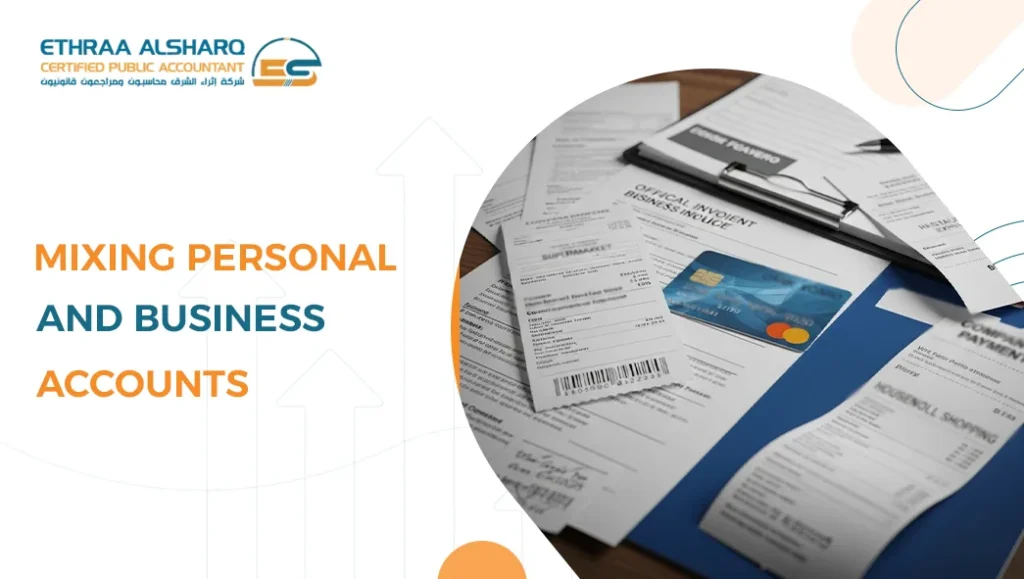
Separating personal finances from business finances is a fundamental principle of sound accounting practice. Yet, many small and medium business owners fall into the trap of mixing the two, believing it provides flexibility. In reality, this practice is often the first step toward financial and legal instability.
In this article, we explore why separating accounts is essential and the risks associated with ignoring this principle.
What Does Mixing Accounts Mean?
Mixing accounts occurs when a business bank account is used to pay personal expenses (such as rent or personal loans), or when business expenses are paid from personal funds without proper recording as loans or capital contributions.
From an accounting perspective, this creates confusion in financial records, making it impossible to determine the true profitability of the business.
Why Is Mixing Accounts Dangerous?
Combining personal and business finances leads to several serious risks:
- Violation of the economic entity principle: Mixing finances undermines the independence of the business as a separate legal entity, weakening the credibility of financial statements.
- Distorted financial performance: Personal expenses recorded as business costs can create false profits or misleading losses, leading to poor strategic decisions.
- Loss of financial control: Random withdrawals for personal use can result in unexpected cash shortages, affecting the company’s ability to meet obligations like salaries and supplier payments.
- Tax and compliance risks: Authorities require records that reflect only business activity. Including personal expenses may lead to rejected deductions, penalties, or inaccurate tax filings.
- Loss of legal protection: In limited liability companies, continuous mixing of funds can expose personal assets to business liabilities.
- Barriers to financing and growth: Financial institutions avoid businesses with unclear financial records, and accountants spend time cleaning data instead of analyzing performance.
Signs of Mixing Personal and Business Finances
You may detect financial overlap through these warning indicators:
- Unjustified expenses: Transactions that do not relate to business activities (e.g., personal groceries or travel).
- Mismatch between activity and cash balance: Low liquidity despite strong operational performance.
- Difficulty explaining transactions: Challenges in linking entries to valid business documents.
- Frequent manual adjustments: Repeated corrections to reconcile unclear transactions.
How to Separate Your Accounts Professionally
To avoid these risks, follow these best practices:
- Open a dedicated business bank account: All business transactions should go through this account only.
- Set a fixed salary for yourself: Treat yourself as an employee and transfer a regular salary to your personal account.
- Use separate payment methods: Maintain different cards for personal and business expenses.
- Document all transactions: Record personal contributions as loans or capital injections with proper documentation.
- Use an accounting system: Automated systems help categorize expenses and prevent overlap.
The Role of Ethraa Al Sharq in Organizing Your Finances
At Ethraa Al Sharq, Certified Accountants and Auditors, we help protect your business by:
- Restructuring and organizing your financial records.
- Separating personal and business transactions according to accounting standards.
- Preparing accurate financial reports that reflect true performance.
- Ensuring compliance with tax and regulatory requirements.
- Implementing accounting systems that maintain financial clarity and transparency.
If you notice confusion in your accounts or struggle to understand your financial position, it may be time to take action. A well-structured financial system is essential for long-term stability and growth.
(FAQ)
Is mixing personal and business finances against regulations?
Yes, it can lead to legal and tax complications, especially during audits or regulatory reviews.
How should personal withdrawals from the company be recorded?
They should be recorded as owner withdrawals or shareholder accounts—not as operating expenses.
Does mixing accounts affect profitability?
Yes, it distorts financial results, making profits appear higher or lower than they actually are.
What should be done if accounts were previously mixed?
You should reorganize records and correct past entries with the help of a professional accountant.
Is having a separate bank account enough?
No, it is a necessary first step, but it must be supported by proper accounting systems and documentation.
Can I take an advance from the company?
Yes, but it must be recorded properly as a shareholder withdrawal or loan and settled accordingly.
What if I used personal funds for business expenses?
Submit the invoice and record a reimbursement entry to ensure proper documentation in the company’s records.